 SEO
SEO
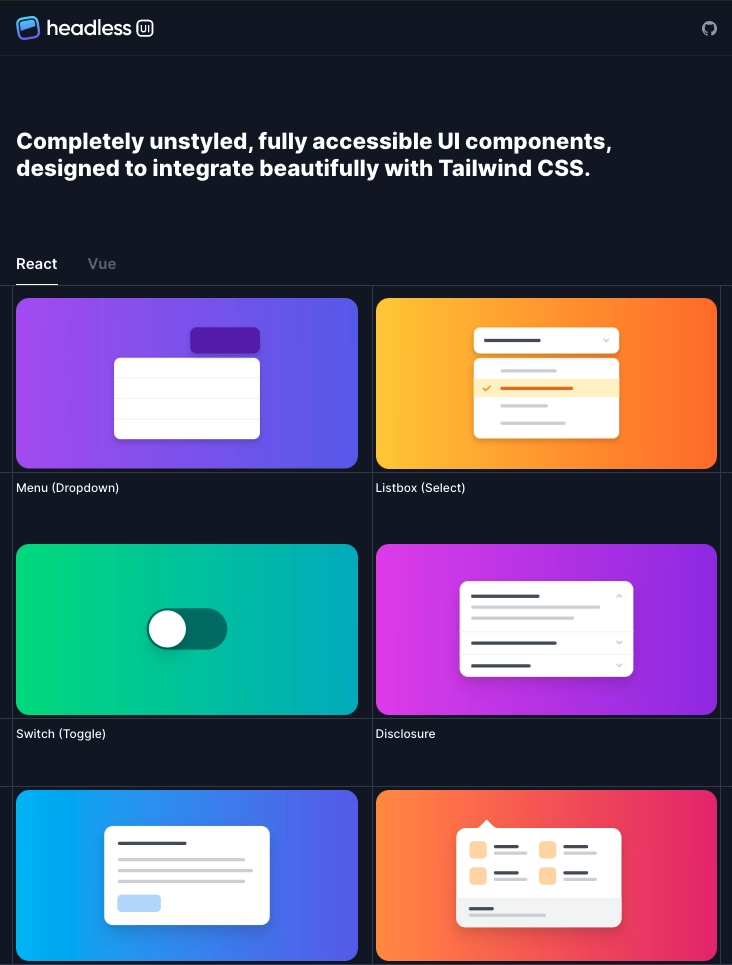
Headless UI: Build Accessible React & Vue Components with Tailwind CSS
Last updated: June 15, 2026 Most developers assume accessibility costs extra time. Headless UI proves the opposite. If you have ever built…

Search engine optimisation without the snake oil: technical SEO, Core Web Vitals, structured data, content that earns links, and how answer engines like ChatGPT and Google’s AI Overviews are changing what “ranking” even means. Written for business owners who want to understand what their site actually needs, and for the developers who have to implement it. It is our biggest topic here — start anywhere.
SEO
Last updated: June 15, 2026 Most developers assume accessibility costs extra time. Headless UI proves the opposite. If you have ever built…
 SEO
SEO
Last updated: June 13, 2026 ASTHO logo – Association of State and Territorial Health Officials Image: ASTHO Imagine a screen reader landing…
 SEO
SEO
Last updated: June 7, 2026 Illustration of unicorns on a wide field of roses and rabbits, representing the rarity of getting web…
 SEO
SEO
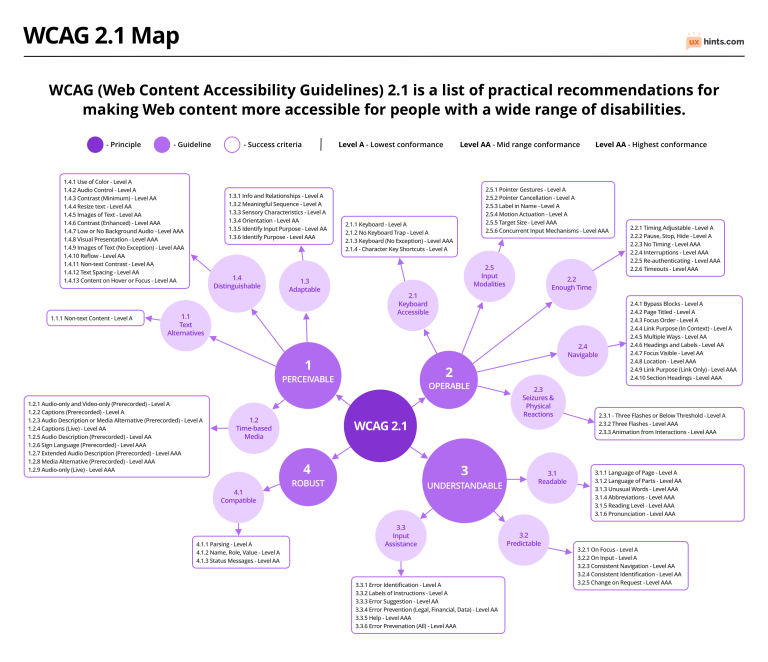
Last updated: June 5, 2026 Writing the article now based on the full brief. Over a billion people worldwide live with some…
 SEO
SEO
Last updated: June 3, 2026 The skill is loaded. Now I’ll execute the final polish – expanding the article per the reviewer’s…
 SEO
SEO
Last updated: June 1, 2026 Split illustration comparing a cluttered React project file tree with a minimal Python HTMX setup, symbolizing the…
 SEO
SEO
Last updated: May 31, 2026 The article:write skill is for writing new articles from topic briefs. This task is expanding an existing…
 SEO
SEO
Last updated: May 29, 2026 Using the article:write skill to draft this article from the provided brief. All research context has been…
 SEO
SEO
Last updated: May 27, 2026 Choosing the wrong backend language web development stack costs teams months of refactoring and thousands in avoidable…
A canonical tag tells search engines which URL is the preferred version of a page when several URLs show the same or near-identical content. Add one whenever a page is reachable at more than one address — filtered or paginated archives, tracking parameters, print views, or an article syndicated elsewhere. Without it, search engines choose a canonical for you, and they do not always choose the one you wanted ranking.
Technical SEO is everything that lets a search engine crawl, render and index your site: speed, sitemaps, structured data, redirects, mobile rendering. On-page SEO is the content itself — titles, headings, copy and internal links. Off-page SEO is what happens elsewhere, mainly links and mentions from other sites. All three compound, which is why a brilliant article on a site that cannot be crawled still ranks nowhere.
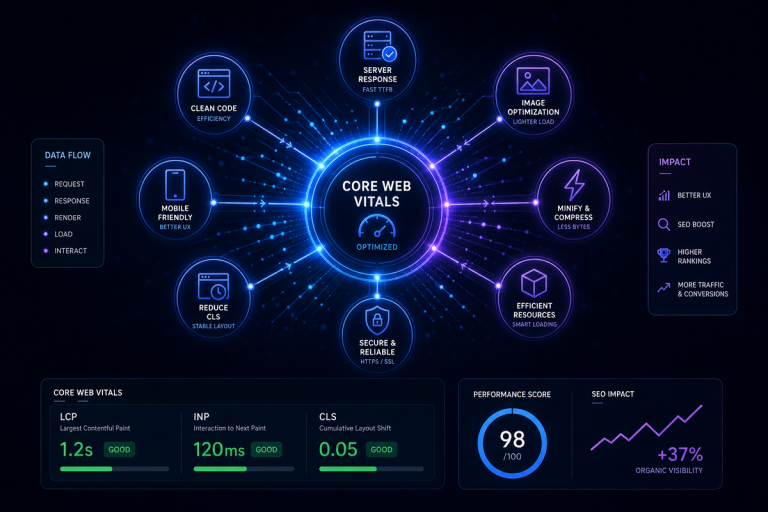
Core Web Vitals are Google’s three page-experience metrics: Largest Contentful Paint, Interaction to Next Paint and Cumulative Layout Shift. The thresholds Google classes as good are LCP under 2.5 seconds, INP under 200 milliseconds and CLS under 0.1, measured at the 75th percentile of real visits. Field data from the Chrome User Experience Report is what counts, not a one-off Lighthouse score on your own laptop.
No — structured data does not boost rankings directly. What it does is make your pages eligible for rich results and far easier for search and AI systems to parse: FAQs, breadcrumbs, product prices, reviews, article authorship. The practical gain is a better-looking, more clickable result and clearer machine-readable facts for answer engines to quote. It has to describe content that is genuinely visible on the page.
Write answers that stand alone. Answer engines lift self-contained passages, so lead each section with a direct one or two sentence answer before you elaborate, use question-shaped headings, keep facts specific and dated, and mark up FAQs and articles with structured data. Being reachable matters too — if your robots.txt blocks the AI crawlers, none of the rest of it is in the running.
No. Keyword density has not been a meaningful ranking factor for well over a decade, and writing to hit a percentage reliably makes copy worse. Search engines match meaning rather than word counts. Cover the topic properly, use the words your readers actually use, and let related terms appear because the subject demands them. The effort is far better spent on being genuinely useful.