 AI
AI
9 Best Vibe Coding Tools in 2026, Tested on Real Builds
Vibe coding has hit the point where every builder claims their tool is fastest, prettiest, and smartest – but is that actually…

Artificial intelligence as it actually turns up in day-to-day work: using LLMs to build faster, wiring models into real products, automating the genuinely boring parts, and being honest about where the technology falls over. For developers adding AI to what they build, and for business owners trying to work out which parts of it are real. No hype, no doom.
AI
Vibe coding has hit the point where every builder claims their tool is fastest, prettiest, and smartest – but is that actually…
 AI
AI
The moment your AI-assisted app freezes solid is the moment vibe coding stops paying dividends and starts collecting interest. That’s the real…
 AI
AI
Isn’t it wild that the same model powers billion-dollar chatbots and a laptop sitting on your desk? By the end of this…
 AI
AI
GGUF quantisation solves a specific problem: a checkpoint that trains beautifully on a data centre GPU cluster still refuses to fit on…
 AI
AI
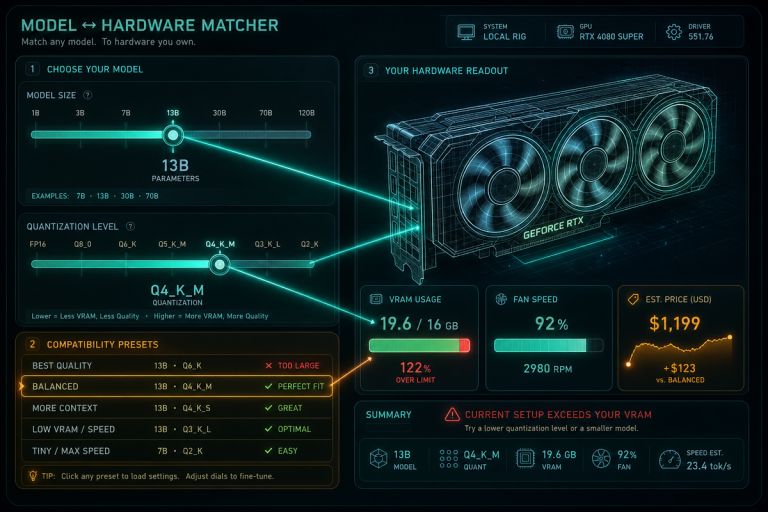
Here’s the expanded article body. Screenshot illustrating local LLM hardware planning, showing GPU memory considerations for running large language models on consumer…
 AI
AI
Last updated: July 27, 2026 Open Graph preview card for the punkpeye/awesome-mcp-servers GitHub repository, showing its title ‘A collection of MCP servers’…
 AI
AI
Last updated: July 13, 2026 Comparison graphic showing logos of Cursor AI alternatives including Windsurf, GitHub Copilot, Claude Code, and Blackbox AI…
 AI
AI
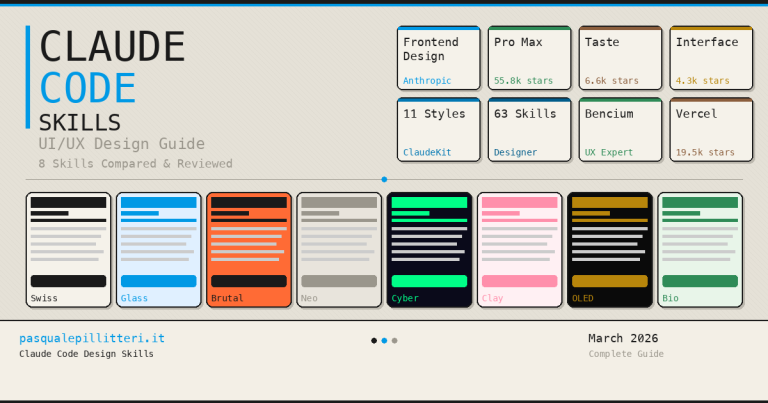
Last updated: July 9, 2026 By the end of this article, you will know how to author reusable Claude Code skills using…
 AI
AI
Last updated: July 7, 2026 AI-generated illustration representing AI tooling and connectivity, thematically tied to MCP server discovery and AI coding assistants.…
A large language model is the underlying model that predicts text. A chatbot is a conversational interface wrapped around one. An AI agent goes further: it is given tools it can call, a goal, and the ability to loop, deciding what to do next based on the result of what it just did. The distinction matters because agents take actions with real consequences, so they need real guardrails.
A hallucination is a confident, fluent answer that is simply wrong, because the model produces plausible text rather than retrieved fact. You reduce them by giving the model the facts instead of relying on its memory: retrieval from your own documents, tool calls to real data sources, and asking for citations you can check. You never eliminate them, so anything consequential still needs a human or an automated check.
RAG, or retrieval-augmented generation, means fetching relevant documents at question time and placing them into the model’s prompt, so the answer is grounded in your content rather than the model’s training data. It is the standard way to make an LLM answer questions about material it was never trained on: your product docs, your policies, your codebase. Retrieval quality, not model choice, is usually what makes RAG good or bad.
It depends entirely on the tool and the plan you are on, so check rather than assume. Consumer tiers frequently train on your inputs by default; business and API tiers usually do not, but that is a terms-of-service question with a specific answer. Before anything sensitive goes near a model, know where the data is processed, how long it is retained, whether it trains the model, and whether your own contracts permit it.
Not automatically. Google’s stated position is that it rewards helpful, people-first content however it was produced, and demotes content made mainly to game rankings. In practice, unedited model output tends to be generic, unsourced and interchangeable, which is exactly the profile that performs badly. AI as a drafting and research aid is fine; publishing at volume without expertise or editing is where the risk actually lives.
Treat tokens like any other metered resource: measure first, then optimise. The reliable wins are routing the easy majority of requests to a smaller model, caching repeated prompts, trimming context you are sending out of habit, and setting hard spend limits on the API key rather than trusting yourself to notice. Runaway cost is nearly always context size per request, not the number of requests.