


Image: Art Institute of Chicago (via DesignRush og:image)
Is either of those languages actually “better” in 2026, or is that even the right question to be asking? Ask ten developers whether PHP vs Python 2026 favours one side and you’ll get ten different answers, mostly shaped by whichever stack they learned first. The more useful question for an agency briefing a new build is narrower: which framework, team, and ecosystem fit this specific project? In practice, the PHP-vs-Python debate has collapsed into a single, much more concrete comparison – Laravel vs Django – and that’s the fight actually worth having.
The case for Laravel: PHP’s modern, batteries-included framework
Image: Art Institute of Chicago (via DesignRush og:image)
Laravel is PHP 8.3+ built around the MVC (Model-View-Controller) pattern, and its biggest selling point is how little glue code you need to write to get something production-ready. Authentication, an ORM (object-relational mapper – the layer that lets you query a database using PHP objects instead of raw SQL), templating and testing tools all ship in the box, which is why so many agencies default to it for client work with fixed budgets and fixed timelines.
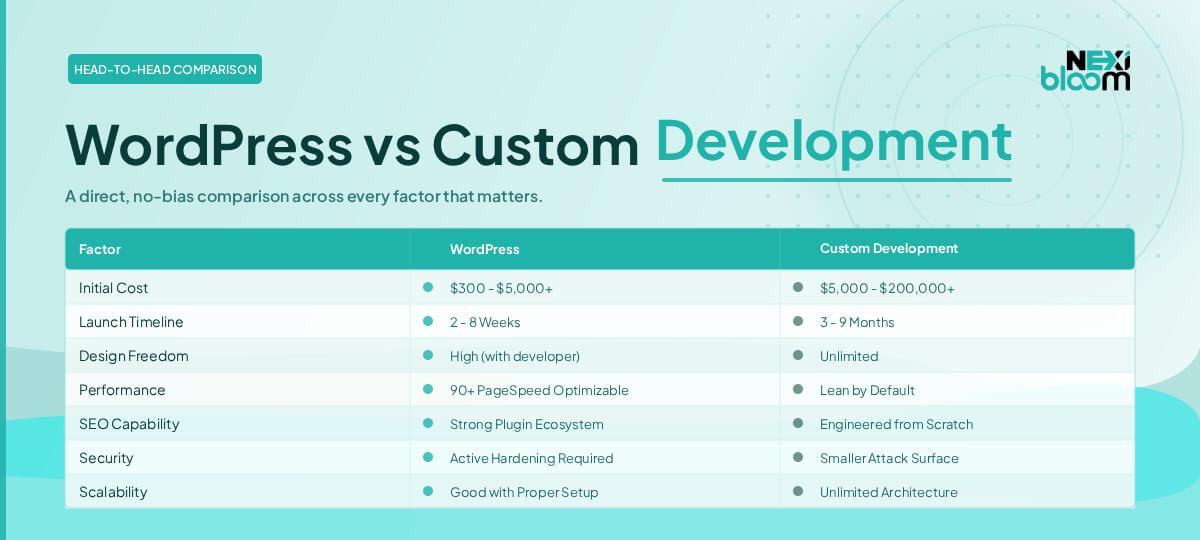
Where Laravel genuinely pulls ahead is background processing. It has a built-in queue system, so sending confirmation emails, resizing images or syncing third-party data doesn’t have to block the request-response cycle – think of it as a kitchen with a dedicated prep station rather than the head chef stopping the plating to peel potatoes. That queue system, along with broadcasting, jobs, and scheduled tasks, is genuinely first-party – it ships with the framework and needs no extra service to function. Real-time features are a different story: Laravel Echo, the JavaScript client that listens for broadcast events, is first-party, but it needs a broadcasting driver to actually push messages, and that’s where Pusher (a paid hosted service) or Reverb (Laravel’s own open-source WebSocket server, first-party but still a separate process you run and monitor) come in. Worth being precise about that distinction, because “Laravel does real-time out of the box” oversells it slightly – what ships out of the box is the plumbing to connect to a broadcaster, not a zero-config broadcaster itself. For anyone weighing up WordPress sau dezvoltare custom: ce alegi pentru afacerea ta? and landing on custom development, Laravel’s queue-and-events combo is often the deciding factor for apps with notification-heavy workflows – marketplaces, booking platforms, anything with a lot of “something happened, now do five other things” logic.
Laravel’s ORM, Eloquent, uses an ActiveRecord-like pattern with chainable, readable queries – User::where('active', true)->orderBy('created_at')->get() reads almost like a sentence. Async support exists but is limited; you typically reach for Octane with Swoole or RoadRunner to get genuinely concurrent request handling, which is more setup than Python developers might expect from a “modern” framework claim.
The case for Django: Python’s rapid-development powerhouse
Django is Python 3.12+ organised around MTV (Model-Template-View) – functionally similar to MVC, with Django’s “view” doing the job most frameworks call a controller. Its standout feature, and the one that swings agency decisions more than any benchmark, is django.contrib.admin: a fully auto-generated admin panel that appears the moment you define your data models.
So what does that actually mean for a client project? It means a working, permission-aware back office for content editors or operations staff, generated for free, on day one – no separate admin product, no extra licence. Laravel’s equivalent, Nova, is a paid add-on. For any project where a non-technical client needs to manage records – a headless catalogue, a bookings system, a small CRM – Django’s admin panel alone can justify the stack choice, which is worth weighing against the trade-offs raised in Headless CMS vs. WordPress: Which Is Right? if content management is central to the brief.
Django’s ORM mirrors Eloquent closely enough that switching between them feels like changing accents rather than languages – both are chainable, both are ActiveRecord-flavoured. Python’s broader ecosystem is Django’s other trump card: if a project might eventually need data science, machine learning or heavy data-processing features, Python’s dominance there means you’re not maintaining two separate codebases in two separate languages down the line.
It’s also worth updating the received wisdom on Django and async, because a lot of agency guidance still repeats a 2021-era caveat. Django’s ORM gained genuinely async query methods – aget(), acreate(), afilter(), aall() and friends – back in Django 4.1, and by the versions in production use in 2026, async views, async middleware and async ORM operations cover most day-to-day querying without dropping into sync_to_async wrappers. The gap that remains is narrower than people assume: transactions and some advanced query patterns still lean synchronous under the hood, so it isn’t a wholesale async ORM in the Node.js sense. But “Django’s ORM is fundamentally synchronous” is no longer an accurate blanket statement, and it shouldn’t be used to rule Django out of I/O-heavy projects by default.
Head-to-head: PHP vs Python 2026, where they actually diverge
Strip away the language-war noise and the practical gaps sit in a handful of categories that actually change a project brief.
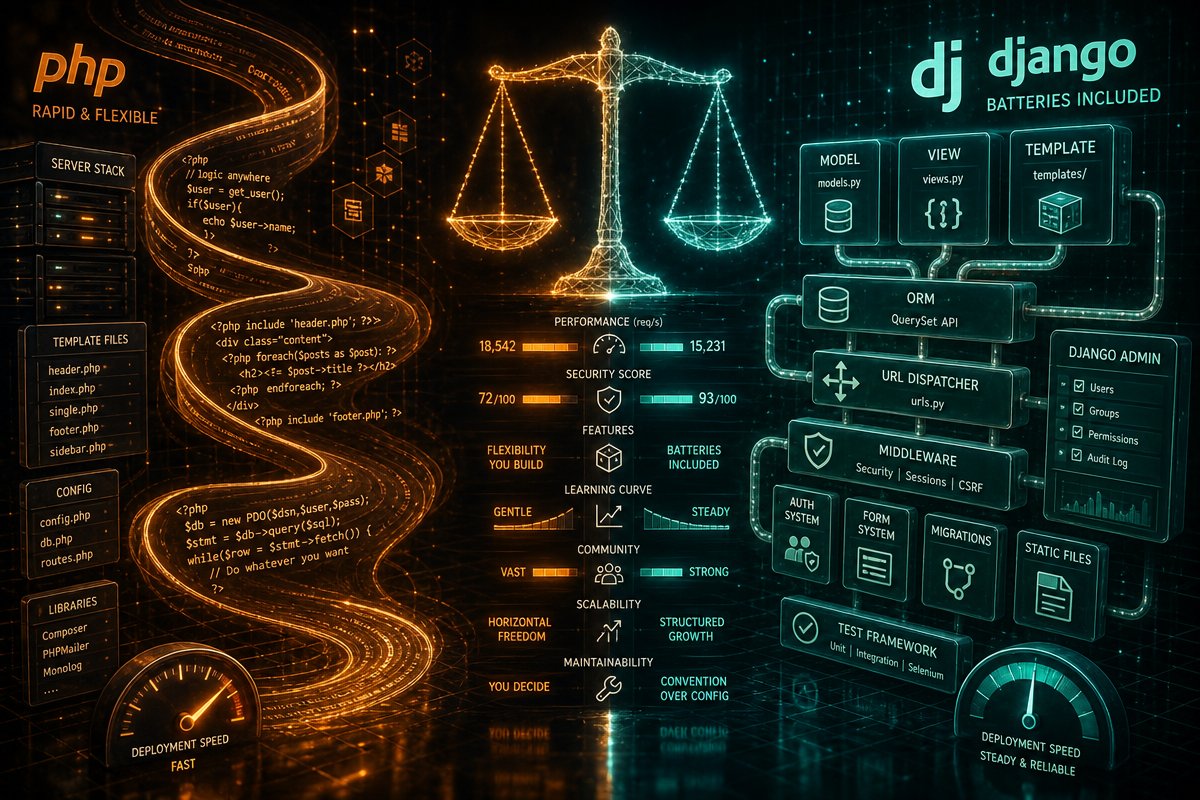
Admin tooling. Django wins outright for client-facing back offices, full stop. A content team that needs to edit records without a developer on call gets that on day one with Django; with Laravel, you’re building custom CRUD screens or paying for Nova.
Background jobs and real-time features. Laravel’s queue system is native and requires nothing beyond a driver (database, Redis or a managed queue service). Real-time is native-plus-driver, as above – Echo ships with Laravel, but you still need Reverb or Pusher running behind it. Django reaches for Celery (a mature but separately installed task queue, usually paired with Redis or RabbitMQ) and Django Channels for WebSockets – both extra moving parts to patch, monitor and keep in step with framework upgrades. If a project’s core logic is “user does X, so system does Y, Z and notifies someone,” Laravel’s approach means fewer services to reason about.
Async. Neither framework is a clean win here, and both stories have narrowed rather than widened. Laravel’s concurrency depends on Octane’s alternative runtime (Swoole or RoadRunner) rather than being baked into the default PHP-FPM setup. Django’s async ORM has matured considerably, as covered above, but async views still commonly call into synchronous middleware or third-party packages that haven’t caught up, so you inherit a mixed sync/async codebase either way. Treat “which one is async-native” as a myth worth retiring on both sides.
Deployment and hosting cost. This is where the two ecosystems genuinely diverge in day-to-day economics. PHP hosting is commodity-cheap and everywhere – shared hosting, managed platforms like Laravel Forge or Vapor, and every budget VPS provider supports it out of the box, because PHP-FPM behind Nginx is a decades-old, well-understood pattern. Python deployment for Django typically means an ASGI or WSGI server (Gunicorn or Uvicorn) behind a reverse proxy, plus more deliberate dependency and virtual-environment management; managed platforms exist (Render, Railway, PythonAnywhere) but the commodity-hosting tier is thinner and slightly pricier than PHP’s. For a small client project with a modest budget, that gap in baseline hosting cost is a real factor, not a rounding error.
Security posture. Both frameworks take security seriously by default – CSRF protection, parameterised queries via the ORM, and template auto-escaping against XSS are standard in Laravel and Django alike. The practical difference shows up in the surrounding ecosystem: PHP’s history of insecure shared-hosting deployments and outdated plugin ecosystems (largely a WordPress-adjacent reputation problem, not a Laravel one) means client and stakeholder perception sometimes lags the current reality. Django’s security release cadence and its “batteries included” approach to things like password hashing and session handling make it an easy sell for security-conscious clients, but Laravel’s defaults are equally solid in 2026 – this is more a perception gap to manage than a genuine capability gap to design around.
Testing. Both ship first-party testing tools – PHPUnit and Pest integrate tightly with Laravel, including database factories and HTTP test helpers; Django’s TestCase and test client cover the same ground with fixtures and a built-in test runner. Neither has a meaningful edge here; the deciding factor is usually which syntax your team already writes fluently.
Hiring and long-term maintenance. PHP’s developer pool is larger and, in most regional markets, cheaper to hire into – a decade-plus of WordPress and Laravel work means mid-level PHP developers are easy to find. Python’s talent pool skews toward developers who also do data work, which can mean a higher day rate but a developer who can also touch the data pipeline if the project grows that way. For maintenance five years out, Laravel’s disciplined versioning and upgrade guides make major-version jumps predictable; Django’s deprecation policy is similarly disciplined, so neither framework is a maintenance trap – the bigger long-term maintenance risk on both sides is usually unmaintained third-party packages, not the framework itself.
So which one should power your next project?
Pick Django if the project needs a client-manageable admin panel out of the box, if it’s likely to grow data-science or ML features later, or if the team is comfortable trading a smaller hosting-commodity market for a stronger fit with data-heavy roadmaps. Pick Laravel if the app is queue-heavy or real-time by nature – marketplaces, notification systems, live dashboards – if hosting budget is tight, or if your existing team already thinks in PHP and hiring more PHP developers locally is straightforward and cost-effective. Team skills and hiring costs matter as much as feature checklists; a technically “better” framework your developers don’t know is slower to ship than a “good enough” one they do. There’s no universal winner in PHP vs Python 2026, only a better fit for the project sitting in front of you – and that’s a judgement call worth getting a second opinion on before committing a budget to it.
If you’re still weighing up Laravel against Django for an upcoming build, DRS Web Development designs and builds custom websites and web applications for businesses of all sizes – get in touch for a free consultation and we’ll help you pick the stack that actually fits your project, not just the one that’s trending.
Frequently Asked Questions
Q: Is PHP or Python better for web development in 2026?
A: Neither has a universal advantage – the practical comparison is Laravel (PHP) versus Django (Python), and the right choice depends on project needs like admin tooling, background job complexity, hosting budget and existing team skills rather than the language itself.
Q: Does Django or Laravel have a built-in admin panel?
A: Django includes a first-party auto-generated admin panel via django.contrib.admin at no extra cost, while Laravel has no built-in equivalent – its Nova admin package is a paid product.
Q: Which framework handles background jobs and real-time features better?
A: Laravel has native advantages here, with a built-in queue system and Echo shipped as part of the framework, though real-time broadcasting still needs Reverb or a service such as Pusher behind it; Django typically requires separately installed tools like Celery and Channels.
Q: Is Python faster than PHP for async, concurrent applications?
A: Not automatically. Django’s ORM gained genuinely async query methods from Django 4.1 onward and covers most common querying without synchronous wrappers, but transactions and some advanced patterns remain synchronous; Laravel’s async depends on Octane with Swoole or RoadRunner. Both frameworks offer partial async support rather than one being natively superior.
Q: Which stack is cheaper to host and maintain long-term?
A: PHP hosting is generally cheaper and more widely available at the commodity tier, thanks to decades of PHP-FPM deployment patterns; Python/Django hosting has fewer budget-tier options but strong managed platforms. Long-term maintenance cost on both sides depends more on third-party package upkeep than on the framework itself.
Q: Should an agency choose Django or Laravel for a client project?
A: Choose Django if the client needs a ready-made admin panel, the project may expand into data science features, or a smaller hosting-cost gap is acceptable; choose Laravel if the app is queue-heavy or real-time, hosting budget is tight, or the existing development team already works in PHP.
Source: https://www.designrush.com/agency/web-development-companies/trends/php-vs-python
This article was researched and written with AI assistance, then reviewed for accuracy and quality. Riya Shah uses AI tools to help produce content faster while maintaining editorial standards.
Need help with your web project?
From one-day launches to full-scale builds, DRS Web Development delivers modern, fast websites.