
Last updated: June 27, 2026
Picture this: last Tuesday, a team using an AI coding agent merged 23 pull requests before lunch. Their human reviewers, working the same hours they always had, approved 4. The other 19 sat in queue until the following morning, by which point three had merge conflicts and one had introduced a security regression nobody caught until staging. That’s not a productivity win – that’s a pipeline failure wearing a velocity badge.
The tools that generate code at machine speed have outrun the workflows designed to review, merge, and deploy it. If your coding agent workflow was designed around human-paced development, it will buckle under AI-paced volume. According to the Opsera 2026 AI Coding Impact Benchmark, AI-generated pull requests wait 4.6x longer for review than human-authored ones [citation needed] – even as time-to-PR drops by nearly half. Faster creation, slower delivery. Here are five structural changes that make the difference between a pipeline that scales and one that becomes a bottleneck by lunchtime.
1. How to structure PR review for AI-generated code
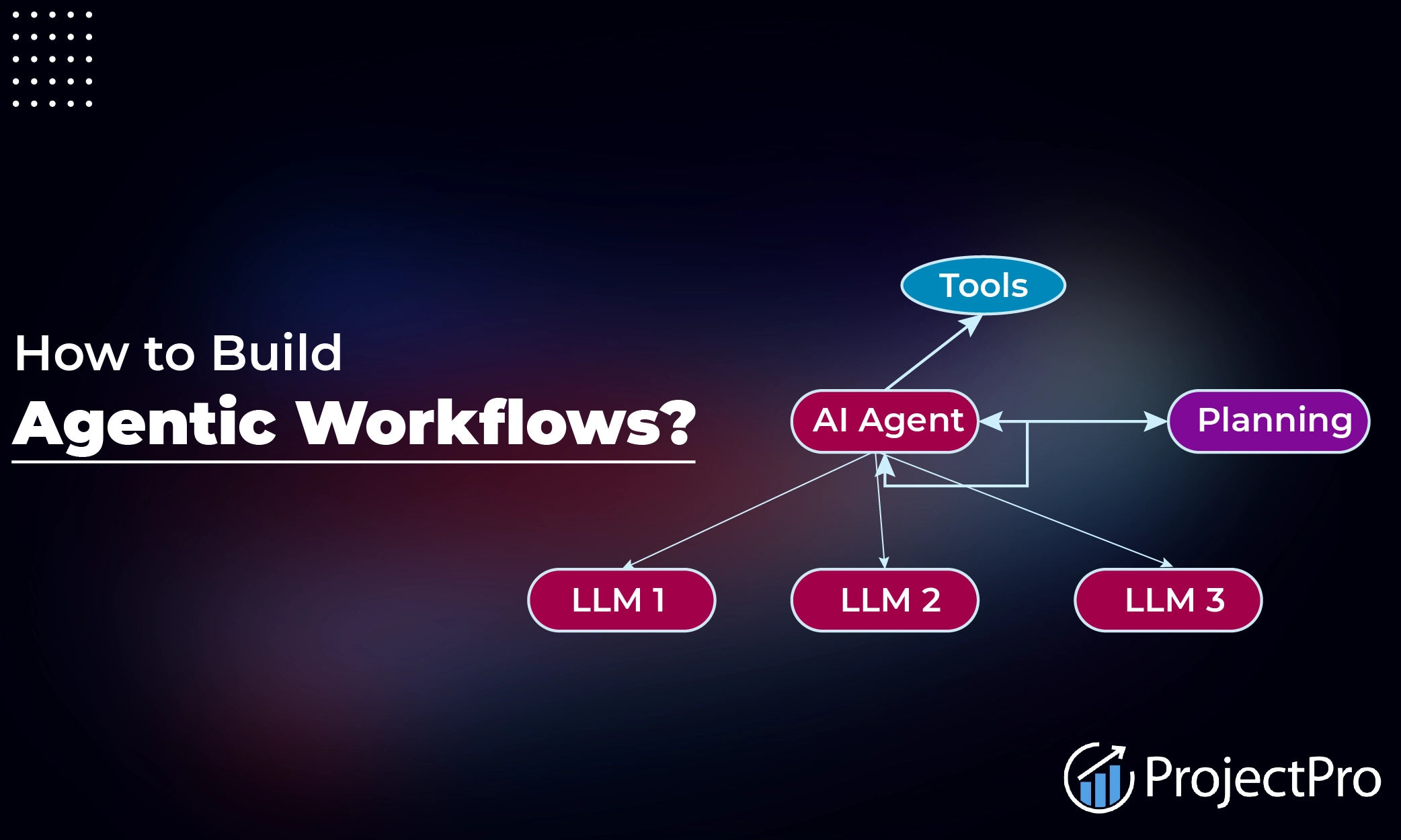
Image: projectpro.io
The most immediate scaling pressure lands on code review. AI agents can open dozens of pull requests in the time it takes a developer to finish one careful review. The instinct is to hire more reviewers or extend review timelines – neither of which addresses the root problem.
The fix is to add an automated review layer before any human even opens a PR. Tools like CodeRabbit sit between the agent and the reviewer, analysing each change for logic errors, security issues, and style violations before a human is looped in. The reviewer then spends their time on genuinely ambiguous decisions rather than catching missing null checks or inconsistent naming.
You might think automated review is just linting with extra steps. It’s more than that – though be cautious about claims that it “understands intent” the way a senior engineer does. What it does well is pattern-matching against known anti-patterns, summarising large diffs, and flagging structural contradictions that a linter wouldn’t catch. A useful mental model: automated review handles the commodity checking; humans stay for the judgment calls.
A concrete policy that works: configure your CI to post an automated review summary as the first comment on every PR. Reviewers open the PR, read the summary, and can decide in 30 seconds whether this needs deep attention or a quick sign-off. That alone halves reviewer load on routine changes.
2. How to define ownership of agent-generated PRs
Before you fix your pipeline, fix your accountability model. When a human developer opens a PR, ownership is obvious. When an agent opens one on behalf of a task, it isn’t. Who reviews it? Who is responsible if it introduces a bug? Who has the authority to close it without merging?
Define this explicitly. A practical approach: every agent-generated PR gets assigned to the developer who triggered the agent run. They become the named owner – not the author, but the accountable party. Tag agent PRs with a distinct label (e.g., agent-generated) so reviewers know what they’re looking at and can apply different scrutiny thresholds.
This also changes how you handle stale PRs. A human-authored PR that’s been open for ten days is probably waiting on discussion. An agent-authored PR that’s been open for ten days is probably orphaned – the task was deprioritised and nobody closed the branch. Auto-close policies for agent PRs after a defined window (say, five days with no activity) prevent queue pollution without manual housekeeping.
3. How to design quality gates that catch problems early
The further a bad commit travels through your pipeline, the more expensive it becomes to fix. At human-paced development that was a manageable risk. At agent-paced volume, technical debt compounds faster than teams can address it.
Quality gates need to live as close to the commit as possible. Think of them like customs checkpoints at a border – you want issues caught before they enter the main flow, not after. That means automated tests that run on every push, coverage thresholds that block merges if they drop, and security scans triggered on each PR rather than in a nightly batch job.
For teams using an agentic development lifecycle, the key architectural decision is where humans retain veto power. Define those checkpoints explicitly. Every gate that a human must manually clear becomes a potential queue under high volume – so distinguish between gates that should block automatically versus those that genuinely need a human eye.
4. How to keep human oversight meaningful at scale
Automated pipelines can lull teams into a false sense of coverage. When thousands of lines of AI-generated code flow through your system each week, human review becomes superficial unless it is structured deliberately. Rubber-stamping everything is the same as reviewing nothing.
The answer is tiered review. Routine changes – dependency updates, boilerplate additions, test refactors – can be reviewed and merged automatically once quality gates pass. Structural changes, new endpoints, database migrations, and security-sensitive code require a human reviewer with explicit sign-off. This is similar to how financial institutions tier transaction approvals: small transfers are automatic, large transfers have a manual review stage.
A simple policy pattern: maintain a SENSITIVE_PATHS config file in your repository listing directories that always require human review (e.g., auth/, payments/, migrations/). Your CI checks whether any changed files match those paths and routes accordingly. Takes an hour to set up; prevents a class of incidents entirely.
If you’re getting started with agent-based development, a structured course like the 5-Day AI Agents intensive from Google and Kaggle gives a solid grounding in how to frame these review stages from the start – much easier than retrofitting oversight onto an existing wild-west pipeline.
5. How to manage branch hygiene at AI code volume
Before AI agents, branch sprawl was mostly a communication problem. One developer, one branch, forgotten for three weeks. At agent volume, it becomes an infrastructure problem. An agent running autonomously on ten tasks simultaneously can create ten branches per hour – each with dependencies, conflicts, and merge windows.
Branch naming conventions, automatic stale-branch pruning, and dependency graphs between PRs are not optional at this scale. They are table stakes. Configure your repository to close branches automatically after merge, surface merge conflicts before they become cascading failures, and label agent-created PRs distinctly so human reviewers know what they’re looking at.
6. How verification prevents compounding failures
The single biggest risk with a high-volume coding agent workflow isn’t a single bad commit – it’s a cascade where one bad merge enables ten more bad merges before anyone notices. Agentic development hinges on verification at every layer: build verification, deployment verification, and runtime verification.
Treat verification like a smoke alarm rather than a post-mortem. Automated rollback triggers, canary deployments for agent-generated changes, and mandatory integration tests on staging before production promotion all act as circuit breakers. Canary releases are particularly useful here – routing 5% of traffic to a new agent-generated change before full promotion means a bad deployment affects a small slice of users, not all of them. The goal is to contain the blast radius of a bad agent run, not to prevent agents from running.
Throughput is not the goal. Reliable, verified throughput is.
The metrics that tell you if it’s working
Good intentions don’t scale – but numbers do. If you’re restructuring your pipeline for AI-paced volume, these are the four metrics worth tracking weekly:
PR age (time from open to merge): Should stay flat or decrease as you add automation. If it’s climbing, your review tier assignments are wrong or your gates are too aggressive.
Reviewer load (open PRs per reviewer at any given time): Above 8-10 open PRs per reviewer and quality degrades. This is the canary metric for pipeline stress.
Merge failure rate (PRs that fail post-merge checks on main): Should be near zero. Any non-zero trend here means your pre-merge gates aren’t catching what they should.
Rollback frequency (production rollbacks per week): The lagging indicator. If this spikes, trace back to which stage of the pipeline the original problem passed through undetected.
Track these in a simple dashboard – even a shared spreadsheet updated weekly is better than nothing. Metrics make the invisible visible, and at agent-paced volume, invisible problems compound fast.
The theme across all of these is the same: AI coding agents generate volume that human workflows weren’t designed for. The teams that scale successfully aren’t the ones who move humans faster – they’re the ones who restructure which decisions require humans at all, assign clear ownership to agent-generated work, automate the rest, and build circuit breakers into every stage. Less scrambling, more signal. That’s what a pipeline that actually scales looks like.
Frequently Asked Questions
Q: What is a coding agent workflow and why does it need special design?
A: A coding agent workflow is the structured pipeline through which AI-generated code moves from creation through review, testing, and deployment. It needs special design because AI agents produce code at a volume and speed that overwhelms processes built for human developers – without structural changes, review queues, quality, and oversight all degrade simultaneously.
Q: How do you keep humans meaningfully involved when AI generates most of the code?
A: Use tiered review – automate approval for routine changes that pass quality gates, and reserve human review for structural, security-sensitive, or high-risk changes. This keeps human attention focused on decisions that genuinely require judgment rather than spreading it thin across commodity checks.
Q: What quality gates are most important in an AI-paced development pipeline?
A: Automated tests, code coverage thresholds, and security scans should all trigger on every push or PR, not in nightly batches. The closer a gate is to the commit, the cheaper it is to fix what it catches.
Q: How does branch management change when using AI coding agents?
A: Agents can create branches at a rate that causes sprawl, conflicts, and dependency tangles. Enforcing naming conventions, auto-pruning stale branches, and clearly labelling agent-created PRs helps humans navigate the system without being overwhelmed by volume.
Q: Who is responsible for bugs introduced by an AI coding agent?
A: The developer who triggered the agent run should be the named owner of any resulting PR. Ownership doesn’t transfer to the agent – accountability needs a human attached to it. Define this policy explicitly before you scale agent usage, not after the first incident.
Q: What is the biggest risk of a high-volume coding agent workflow?
A: Cascading failures – where one bad merge creates the conditions for more bad merges before anyone catches the original problem. Automated rollbacks, canary deployments, and mandatory staging verification act as circuit breakers that contain the damage from any single bad agent run.
Source: https://www.coderabbit.ai/guides/coding-agent-workflow
This article was researched and written with AI assistance, then reviewed for accuracy and quality. Nia Campbell uses AI tools to help produce content faster while maintaining editorial standards.
Need help with your web project?
From one-day launches to full-scale builds, DRS Web Development delivers modern, fast websites.