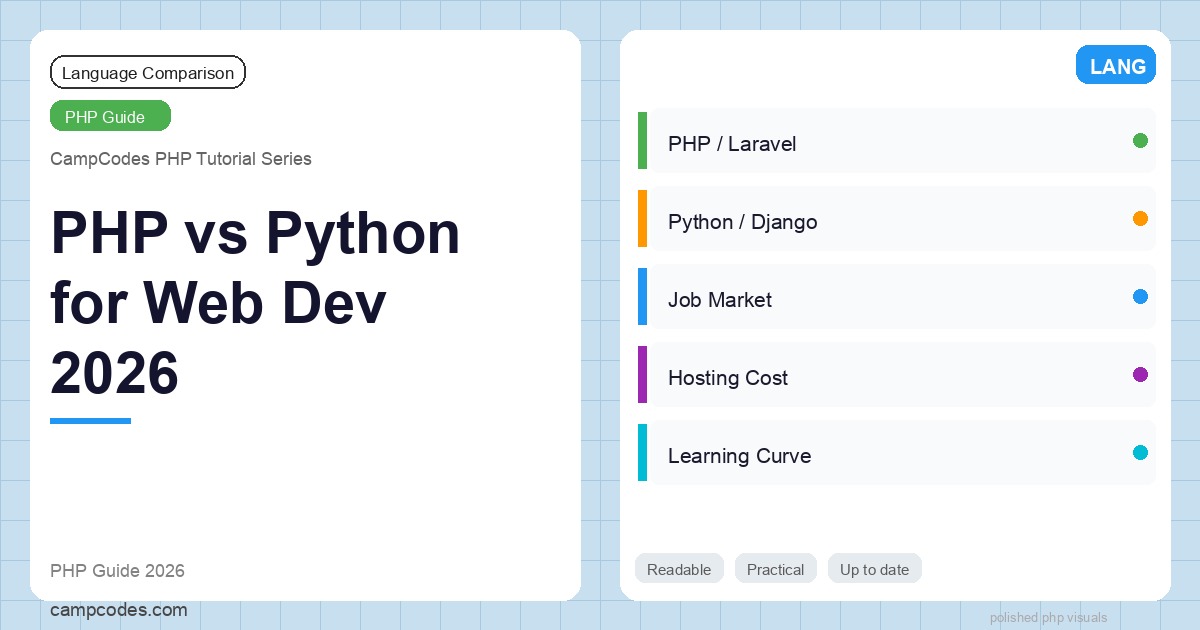



Before we run scrapers, let’s think practically: what fits your stack.
When a client asks whether their scraper should be written in PHP or Python, they’re rarely asking about syntax. They’re asking which language will save them money in six months. Here’s the bold claim: for most greenfield scraping projects, Python wins on tooling depth, but PHP earns its keep when the scraper lives inside an existing PHP application. The PHP vs Python scraping debate isn’t ideology – it’s total cost of ownership, and the answer depends entirely on what’s already running your stack.
What’s the real difference between PHP and Python for web scraping?
Image: Oxylabs
Python’s advantage is breadth of purpose-built tooling; PHP’s advantage is integration cost when your application is already PHP. That’s the whole story, stripped of hype.
Python’s scraping ecosystem is genuinely deep. You’ve got Selenium and Playwright for browser automation, MechanicalSoup for form-heavy sites, Scrapy for production crawling, Requests for straightforward HTTP work, and Beautiful Soup and lxml for parsing – a spread of options that Bright Data’s own comparison work highlights as a key reason developers reach for Python first. Think of it like a toolbox where someone has already labelled every drawer: screwdrivers here, spanners there, nothing improvised. PHP scraping, by contrast, usually means Guzzle for HTTP requests bolted onto Symfony’s DomCrawler component – capable, but assembled rather than purpose-built. It works. It’s just less of a dedicated craft.
So what does that mean in practice? If you’re starting from zero, Python’s tooling reduces the number of decisions you have to make and the amount of glue code you have to write.
Where does each tool actually earn its place?
BeautifulSoup and Scrapy solve different problems, and conflating them is where most scraping projects go wrong. BeautifulSoup is a parsing library, not a scraper – it reads HTML and XML but does nothing to fetch pages, so it has to be paired with requests or httpx to do anything useful. Scrapy is a full crawling framework with concurrency, item pipelines, and middleware built in. One is a scalpel; the other is an operating theatre.
That distinction shows up immediately in the learning curve. BeautifulSoup’s API is low-friction and intuitive – most developers are extracting data within the hour. Scrapy sits medium-to-high, because you’re learning its Twisted-based architecture, not just a parsing syntax. Concurrency follows the same pattern: manual threading or async in BeautifulSoup, built-in via Twisted in Scrapy, and entirely someone else’s problem if you’re using a scraping API. Myth: “Scrapy is just BeautifulSoup with extra steps.” Reality: they’re not interchangeable, and picking the wrong one means either wrestling threading code by hand or lugging a full crawling framework into a job that needed ten lines of parsing.
JavaScript rendering is the sharpest dividing line. BeautifulSoup can’t render JS at all – it only sees what’s in the raw HTML response. Scrapy can render it, but only via plugins like Splash or Playwright, adding another moving part to your deployment. API-based scraping services typically render JavaScript out of the box, which matters enormously once you’re up against a client-rendered React storefront rather than a static HTML page.
The nuance most comparisons skip
Deployment footprint rarely gets mentioned, and it should decide more of these arguments than it does. A BeautifulSoup script is just a Python file with two dependencies. A Scrapy project means managing a Twisted-reactor-based process, which is a heavier operational commitment than most teams expect going in. A scraping API collapses all of that into a single container call or static binary – genuinely the pragmatic option for teams without Python expertise on staff, which loops straight back to the PHP question: if your team is PHP-native, hitting a scraping API from Guzzle sidesteps the tooling gap entirely rather than forcing a language switch.
This is also where language modernity gets overstated. PHP has moved on considerably from its early-2000s reputation, as our piece on what actually replaced PHP covers in more detail – it’s a poor reason on its own to avoid it for scraping work bolted onto an existing PHP app.
So: Python if you’re building a dedicated scraping service and want the deepest tool selection. PHP if the scraper is a feature inside a PHP application and a language switch would cost more in integration debt than it saves in tooling elegance. Neither choice is wrong – the mistake is picking based on which language you read about most recently rather than what’s actually running in production.
If your business needs a scraper, a data pipeline, or any custom web application built around your existing stack, DRS Web Development builds bespoke websites and web applications for businesses of all sizes. Get in touch for a free consultation.
Frequently Asked Questions
Q: Is Python better than PHP for web scraping?
A: Python has a deeper, more purpose-built scraping ecosystem (Scrapy, BeautifulSoup, Selenium), making it the stronger default for new, standalone scraping projects. PHP remains a sound choice when the scraper needs to integrate tightly with an existing PHP application.
Q: What’s the difference between BeautifulSoup and Scrapy?
A: BeautifulSoup is a parsing library that extracts data from HTML you’ve already fetched, while Scrapy is a full crawling framework with built-in concurrency, pipelines, and middleware. They solve different stages of the scraping problem, not the same one.
Q: Can BeautifulSoup scrape JavaScript-rendered websites?
A: No. BeautifulSoup only parses the raw HTML it’s given and cannot execute JavaScript, so client-rendered content won’t appear in its results without pairing it with a browser automation tool.
Q: Do I need Scrapy for a small scraping project?
A: Usually not. Scrapy’s concurrency and pipeline architecture pay off at scale, but for a small, one-off extraction job, a lightweight combination of requests and BeautifulSoup is faster to build and easier to maintain.
Q: Should I use a scraping API instead of building my own scraper?
A: If your team lacks Python expertise or you need JavaScript rendering without managing browser infrastructure, a scraping API shifts that complexity to the provider and deploys as a single container or binary call.
Source: https://oxylabs.cn/blog/php-vs-python
This article was researched and written with AI assistance, then reviewed for accuracy and quality. Riya Shah uses AI tools to help produce content faster while maintaining editorial standards.
Need help with your web project?
From one-day launches to full-scale builds, DRS Web Development delivers modern, fast websites.