

Last updated: April 16, 2026
Are you actually measuring the metrics that matter, or just watching a green Lighthouse score while your bounce rate climbs?
In 2026, the gap between sites that convert and sites that quietly haemorrhage traffic has less to do with aesthetics and more to do with a handful of technical and behavioural signals that most developers still treat as optional extras. Solid website optimisation strategies are no longer a sprint you run before launch – they are the continuous discipline that determines whether organic search rewards you or ignores you. Here is what practitioners need to act on right now.
Why technical optimisation still outperforms UX tweaks alone

Image: sprinix.com
Technical optimisation delivers measurable, repeatable gains. When you fix a render-blocking resource or reduce Time to First Byte (TTFB – the delay between a browser requesting a page and receiving the first byte of data), you lift performance for every single visitor, on every device, in every geography, simultaneously. One change. Universal benefit.
Compare that to a UX redesign of a call-to-action button. That change might lift conversions by two or three percent among a specific user segment. Meaningful, but narrow. Technical foundations are the bedrock. UX refinements are the polish.
Google’s Core Web Vitals – Largest Contentful Paint (LCP), Interaction to Next Paint (INP), and Cumulative Layout Shift (CLS) – remain the clearest proxy for real-world user experience in 2026. LCP measures how quickly the main content loads. INP replaced First Input Delay [citation needed] and captures responsiveness across all interactions, not just the first click. CLS quantifies how much the page jumps around while loading – infuriating for users, punishing for rankings.
Sites hitting “Good” thresholds on all three (LCP under 2.5 seconds, INP under 200 milliseconds, CLS under 0.1) consistently outperform peers in organic click-through rates. Not because Google simply rewards the score – but because those thresholds genuinely correlate with users who stay and engage.
Before you redesign anything, audit your Core Web Vitals in the field (real user data, not just lab tests). PageSpeed Insights and Chrome User Experience Report (CrUX) data are free. Use them.
Where UX-focused optimisation closes the gap
Technical performance gets visitors through the door. UX optimisation decides whether they stay.
Session behaviour analytics – heatmaps, scroll depth tracking, rage-click detection – reveal friction points that no Lighthouse audit will surface. A user who loads your pricing page in 1.2 seconds but immediately scrolls to the bottom, finds nothing, and leaves is a conversion problem, not a performance problem. These are different diagnoses requiring different treatments.
Conversion Rate Optimisation (CRO) in 2026 leans heavily on personalisation signals. Above-the-fold content that adapts to referral source, device type, or returning visitor status consistently outperforms static layouts in A/B tests. This is not speculative – it is table stakes for e-commerce and SaaS landing pages.
Internal linking strategy sits at the intersection of UX and SEO. Well-structured internal links reduce bounce rate by giving visitors obvious next steps, and they distribute PageRank (Google’s measure of a page’s authority) across your site more efficiently. If you are planning a broader overhaul, the Website Redesign Checklist: A Step-by-Step Guide to Redesigning Your… is a practical reference for ensuring neither performance nor UX is sacrificed during a transition.
One myth worth busting here: a visually minimalist design is not automatically fast. A site with three large uncompressed hero images and a full-width video autoplay is still slow, regardless of how clean it looks. Perceived simplicity and technical efficiency are entirely independent properties.
Head-to-head: fast wins vs slow burns
Some optimisations pay off within days. Others take months. Knowing which is which prevents misallocated effort.
Fast wins – immediate, measurable impact:
– Enabling HTTP/2 or HTTP/3 on your server (parallel request handling; older HTTP/1.1 queues requests serially)
– Serving images in modern formats – WebP or AVIF instead of PNG or JPEG – and using srcset to deliver appropriately sized images per device
– Deferring non-critical JavaScript so it does not block the initial render
– Adding width and height attributes to all images to prevent CLS
– Implementing a Content Delivery Network (CDN) to serve static assets from servers geographically closer to users
Slow burns – compounding returns over weeks or months:
– Building topical authority through a coherent content cluster strategy
– Earning high-quality backlinks that lift domain authority
– Iterative A/B testing of page layouts based on real session data
– Migrating to a more performant CMS or framework where the current platform is the bottleneck
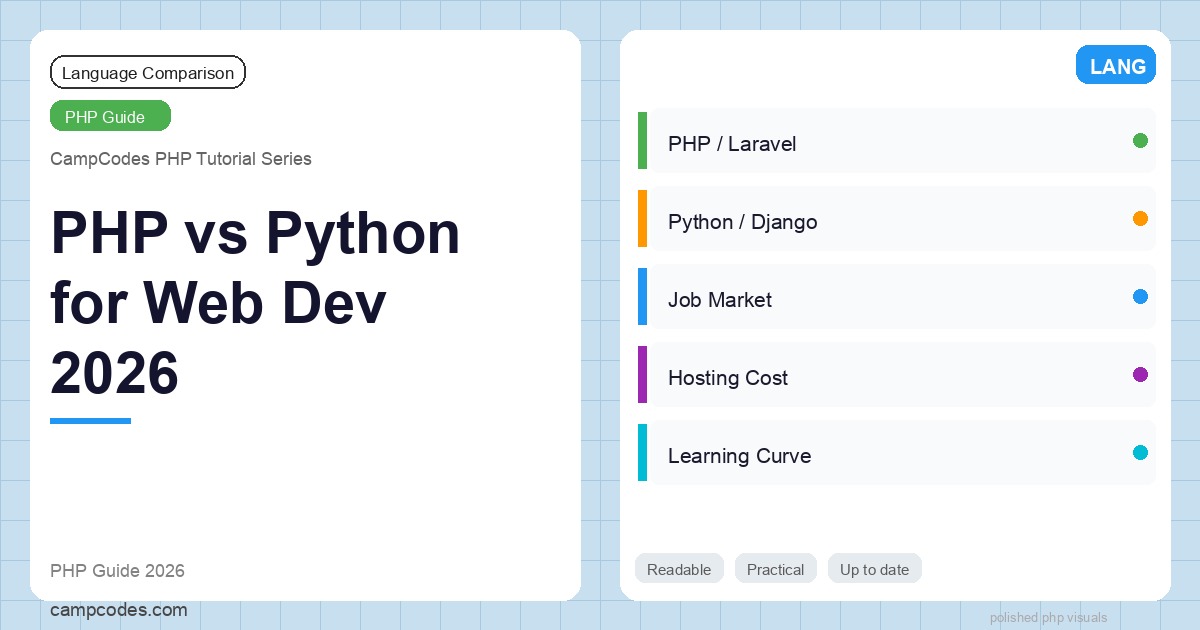
On that last point – platform choice genuinely constrains how far you can push performance. If you are hitting the ceiling of what WordPress or a comparable CMS will allow, the Django vs. WordPress: Which CMS Is Better for Your Project? comparison is worth reading before committing to a rebuild.
Crawlability and indexation: the overlooked foundation
Search engines cannot rank pages they cannot reliably find and parse. Crawl budget – the number of pages a search engine will crawl on your site within a given timeframe – matters more on large sites, but the principles apply everywhere.
A clean XML sitemap, a well-configured robots.txt file, and the removal of duplicate or low-value URLs (thin content pages, infinite scroll parameters, session IDs in URLs) all contribute to search engines spending their crawl budget on your best content. Canonical tags (the <link rel="canonical"> directive) tell search engines which version of a page to treat as authoritative when duplicates exist.
Structured data (Schema.org markup) gives search engines explicit context about your content type – articles, products, FAQs, events. In 2026, this markup increasingly feeds AI-powered search features (featured snippets, AI Overviews, voice results). If you want your content surfaced in those placements, structured data is no longer optional.
For developers working with automated pipelines or testing environments, understanding how headless browsers behave during crawls can also surface rendering issues – the –headless vs –headless=chrome vs –headless=new in Selenium article covers the distinctions clearly.
The honest recommendation
If your site scores poorly on Core Web Vitals and has known crawlability issues, start technical. The returns are higher, faster, and they compound. A one-second improvement in LCP has been correlated with conversion rate lifts of between 2 and 7 percent across multiple large-scale studies [citation needed] – that is not marginal.
If your technical foundations are already solid (Good CWV scores, clean crawl, TTFB under 800ms), shift focus to session behaviour and CRO. That is where the next tranche of gains lives.
The mistake most teams make is treating these as competing priorities. They are sequential phases. Get the infrastructure right. Then optimise the experience on top of it.
Frequently Asked Questions
Q: What are the most impactful website optimisation strategies in 2026?
A: Prioritising Core Web Vitals (LCP, INP, CLS), serving images in modern formats like WebP or AVIF, deferring non-critical JavaScript, and implementing a CDN deliver the fastest measurable gains. Once technical foundations are solid, session behaviour analytics and A/B testing drive further conversion improvements.
Q: Does a good Lighthouse score mean my site will rank well?
A: Not directly. Lighthouse scores are lab-based and use simulated conditions. Google ranks based on field data from real users (CrUX data). A site can score 90+ in Lighthouse but still have poor field performance due to third-party scripts, server location, or real-device constraints.
Q: How does Core Web Vitals affect SEO rankings?
A: Core Web Vitals are a confirmed ranking signal within Google’s Page Experience framework. Sites hitting “Good” thresholds across LCP, INP, and CLS receive a ranking benefit, particularly in competitive niches where content quality between competing pages is similar.
Q: How long does it take to see results from website optimisation work?
A: Technical fixes like image compression, JavaScript deferral, and CDN implementation can show measurable improvements in performance scores within days. SEO gains from crawlability improvements and content strategy typically take four to twelve weeks to appear in ranking data.
Q: Should I rebuild my site to improve performance, or optimise the existing one?
A: Optimise first. Most performance bottlenecks can be resolved without a rebuild. A rebuild is warranted only when the platform itself prevents you from implementing necessary changes – for example, a CMS that forces render-blocking scripts you cannot remove or delay.
If you want a site that performs well on every metric that matters in 2026 – not just visually, but technically and commercially – DRS Web Development builds custom websites and web applications for businesses of all sizes. Get in touch for a free consultation.
Source: https://www.fullsession.io/blog/website-optimisation-strategies/
This article was researched and written with AI assistance, then reviewed for accuracy and quality. Riya Shah uses AI tools to help produce content faster while maintaining editorial standards.
Need help with your web project?
From one-day launches to full-scale builds, DRS Web Development delivers modern, fast websites.