





Last updated: April 29, 2026
Imagine you’re a mid-level developer sitting in a code review, and someone drops a comment: “Why are we still using Django? Isn’t that a bit… 2015?” It’s the kind of remark that sounds confident but rarely comes with evidence. Whether you’re evaluating a new project stack or just want to settle the debate once and for all, this guide will help you make an informed call on Django web development 2026 – and skip the tribal warfare.
By the end, you’ll know exactly where Django shines, where it struggles, how to benchmark it against modern alternatives, and how to set up a project that proves its worth. No hype. No nostalgia.
Prerequisites – What You Need Before You Evaluate
Image: skillgigs.com
You don’t need to be a framework expert, but a few things will make this guide click: a basic understanding of how web servers handle HTTP requests, some exposure to Python (even light scripting counts), and a rough idea of what your target project actually needs – API-first, server-rendered pages, admin tools, or some combination. If you’re also planning a redesign around your new stack, keep a 12-Step Website Redesign Checklist That Protects Your SEO bookmarked – stack choices and SEO outcomes are more connected than most developers realise.
What Is “Batteries Included” and Why It’s Controversial in 2026
Django’s core philosophy – shipping with an ORM (Object-Relational Mapper), admin panel, auth system, form handling, and templating out of the box – is either its greatest asset or its biggest liability depending on who you ask. Think of Django like a Swiss Army knife: everything’s there, immediately useful, no assembly required. FastAPI or Flask, by contrast, are more like a bare blade – lighter, faster to swing, but you’re responsible for fitting the handle yourself.
In a microservices architecture, where each service is a thin slice of responsibility, that Swiss Army knife can feel bulky. But in a monolithic application – a CMS, a SaaS dashboard, an internal tool – the built-in admin alone can save dozens of hours. The controversy is real, but it’s also contextual.
Step 1: Audit Your Project’s Actual Requirements
The single most useful thing you can do before picking a framework is write down what your application genuinely needs on day one – not what it might need in three years. Django’s built-in admin is genuinely production-ready. If your project needs content editors, internal dashboards, or rapid CRUD (Create, Read, Update, Delete) interfaces, you get all of that without writing a line of configuration.
Ask: will this app need user authentication? A relational database? An admin interface for non-developers? If you answer yes to two or more, Django’s defaults will serve you well. If you’re building a stateless API that purely shuttles JSON between a React frontend and a database, the built-ins become irrelevant weight.
Step 2: Benchmark Django Against the Real Alternatives
Django’s main competitors in 2026 are FastAPI (for async, high-throughput APIs), Flask (lightweight, flexible), and to a lesser extent Node.js frameworks like Express. FastAPI is legitimately faster for raw throughput on I/O-bound tasks [citation needed] – the benchmark numbers are not marketing fiction. Django, however, now supports async views natively (introduced in Django 3.1 and significantly matured since), which narrows the gap for most real-world workloads.
The honest take: for a REST API handling thousands of concurrent requests per second, FastAPI has the edge. For a fully-featured web application where developer velocity and maintainability matter more than raw throughput, Django remains the most productive choice per hour of developer time. That’s not opinion – it’s the observation of senior engineers who’ve shipped both.
Step 3: Set Up a Modern Django Project the Right Way
Install Django inside a virtual environment (python -m venv .venv && source .venv/bin/activate && pip install django), then run django-admin startproject myproject. That gives you a working server in under two minutes. Pair it with django-environ for environment variable management and whitenoise for static file serving, and you have a production-ready foundation without touching a single third-party auth library.
For Django web development 2026 specifically, the recommended pattern is: Django for your core application logic, Django REST Framework (DRF) if you need a JSON API alongside your templates, and a modern deployment target like Railway, Render, or a VPS running Gunicorn behind Nginx. The stack is boring in the best possible way – everything is documented, everything has Stack Overflow answers, and everything your junior developers touch has a well-worn path.
Step 4: Recognise Where Django Genuinely Lags
Django’s template engine is not React. If your frontend team lives in component-based JavaScript, Django templates will feel like a step backward. The solution – using Django purely as an API backend with DRF while a separate frontend handles rendering – is entirely valid, but you lose some of the “batteries included” advantage. You’re now maintaining two codebases.
Django’s ORM is also not the right tool for every database interaction. Complex analytical queries, time-series data, or graph relationships can feel like trying to sculpt marble with a spoon. In those cases, raw SQL or a specialised tool is the honest answer – and Django makes it easy to drop down to raw queries when you need to.
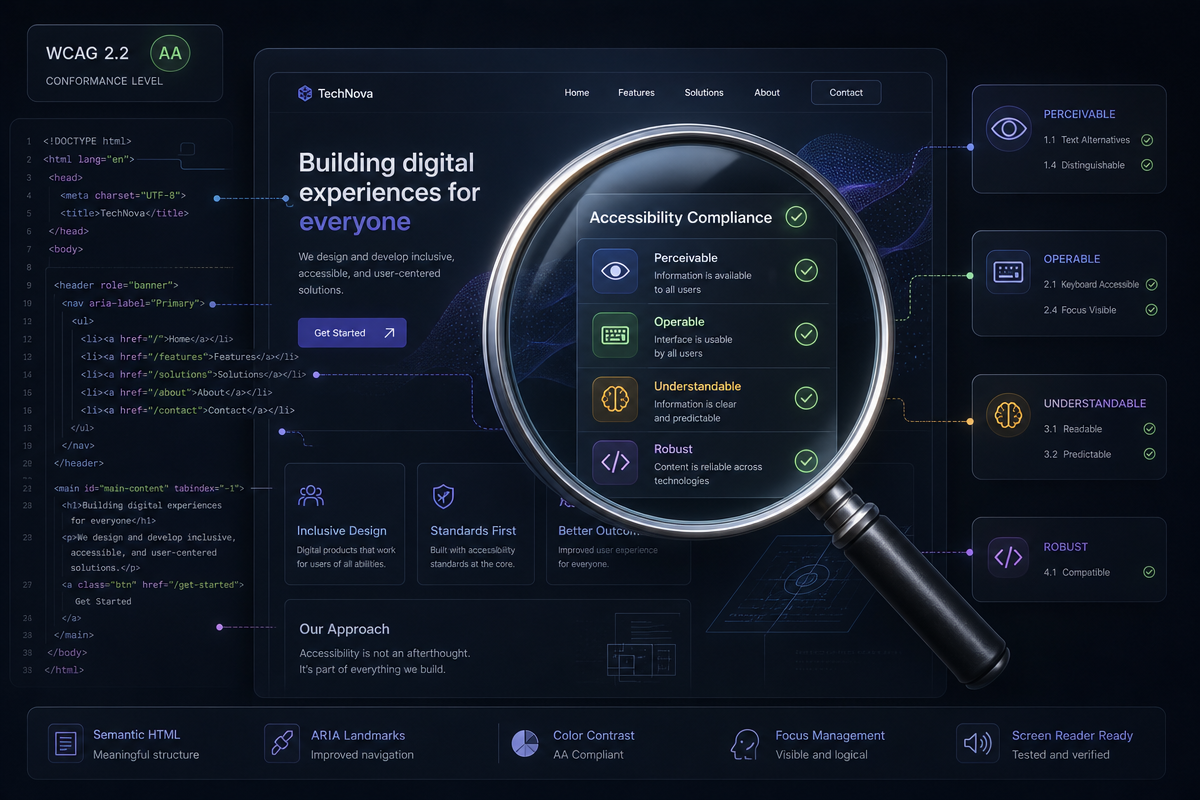
Also worth considering: if your application serves the public, accessibility compliance is not optional in 2026. The ADA Title II Web Accessibility Rule: 2026 Compliance Guide covers what’s now legally required – and Django’s form and template system is well-suited to generating accessible HTML when used correctly.
Troubleshooting – Three Myths That Trip Developers Up
Myth: Django is slow. Out of context, yes – Django has more startup overhead than Flask or FastAPI. In context, most applications are bottlenecked by database queries, not framework overhead. Profile before you conclude.
Myth: Django is only for monoliths. Django works perfectly well as a microservice. A single Django app handling just authentication, or just content management, is a completely valid architecture. The ORM and admin don’t force you into a monolith – they’re optional per service.
Myth: Nobody uses Django anymore. Instagram, Disqus, Pinterest, and Mozilla have all built on Django at scale [citation needed]. The ecosystem is active, the release cadence is consistent, and the LTS (Long-Term Support) versions are genuinely maintained. The community is smaller than JavaScript’s, but it’s focused and high-quality.
Where to Go Deeper
Once your Django project is running, the most valuable next steps are: learning Django REST Framework if you need an API layer, exploring django-allauth for social authentication, and understanding how Django’s migration system works under pressure (it’s not magic – it’s a directed acyclic graph of schema changes, and knowing that helps when migrations conflict). The official Django documentation is among the best in any web framework – use it.
If you’re building something production-ready and want a team with genuine experience in Django web development 2026, that’s exactly the kind of project worth getting right from the start.
If you’re ready to build a web application that will actually hold up under real conditions – not just a demo, not just a prototype – DRS Web Development builds custom websites and web applications for businesses of all sizes. Get in touch at drs-web.co.uk/contact for a free consultation and let’s talk about the right stack for your specific needs.
Frequently Asked Questions
Q: Is Django still relevant for web development in 2026?
A: Yes – Django remains one of the most productive frameworks for building full-featured web applications. It has strong institutional adoption, active maintenance, and mature async support that closes much of the performance gap with newer alternatives.
Q: Should I use Django or FastAPI for a new project in 2026?
A: Choose Django if your project needs an admin interface, authentication, and rapid CRUD development. Choose FastAPI if you’re building a stateless JSON API where raw throughput is the primary concern and you don’t need Django’s built-in tooling.
Q: Is Django’s “batteries included” approach a problem in a microservices architecture?
A: It can be – if each microservice includes Django’s full stack, you’re carrying unnecessary overhead. However, Django is perfectly capable of running as a lightweight microservice; you simply don’t use the parts you don’t need.
Q: How long does it take to learn Django as a Python developer?
A: Most Python developers can build a working CRUD application within a weekend using Django’s official tutorial. Reaching production-grade proficiency – understanding migrations, security hardening, and deployment – typically takes a few weeks of deliberate practice.
Q: Does Django support modern async Python?
A: Yes. Django has supported async views, middleware, and ORM queries since version 3.1 [citation needed], with continued improvements in subsequent releases. For most applications, async support is mature enough for production use.
Source: https://web.learnmodernpython.com/is-django-still-relevant-in-2026-your-definitive-guide/
This article was researched and written with AI assistance, then reviewed for accuracy and quality. Riya Shah uses AI tools to help produce content faster while maintaining editorial standards.
Need help with your web project?
From one-day launches to full-scale builds, DRS Web Development delivers modern, fast websites.