







Last updated: April 27, 2026
Have you ever stared at someone else’s PHP and wondered why they sometimes write ClassName::method() and other times $object->method() – and whether it actually matters? It does. Choosing the wrong operator causes a fatal error. Choose the right one, and your code reflects exactly how the class is structured. This guide cuts through the PHP double colon vs arrow confusion once and for all, so you can read and write object-oriented PHP with confidence.
The :: Operator: Accessing What Belongs to the Class Itself
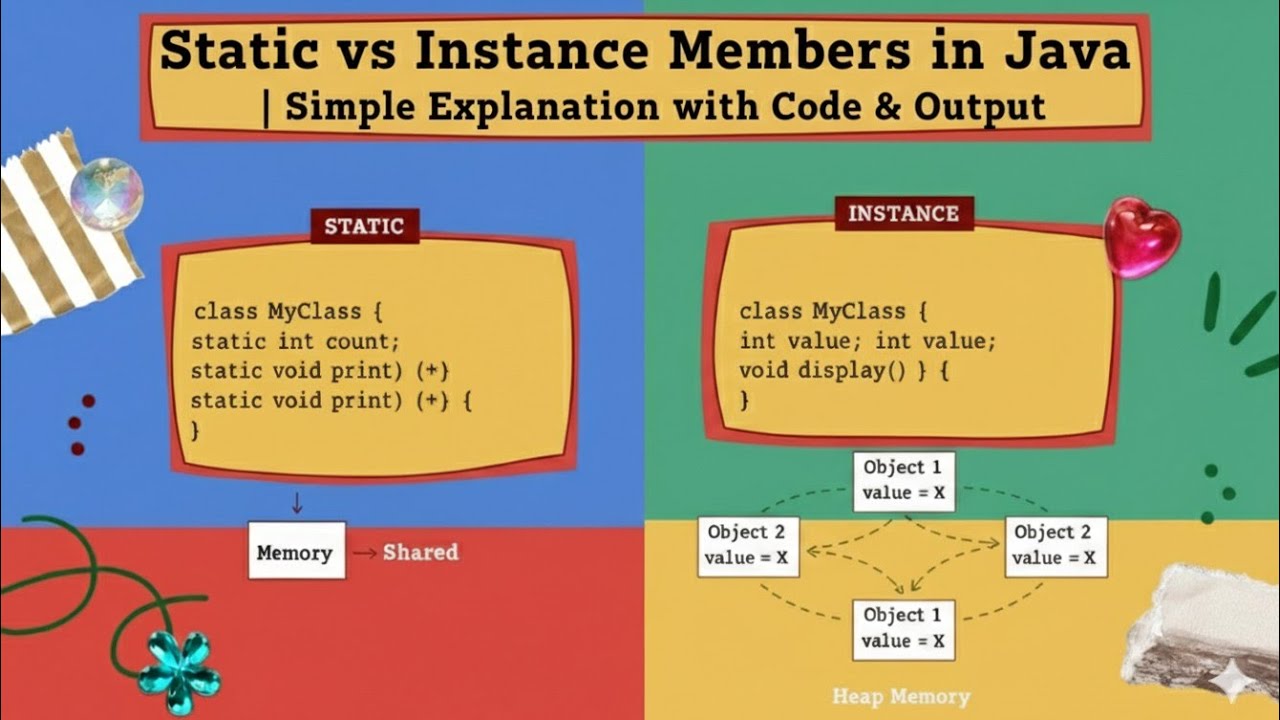
Image: www.youtube.com > CodeCraft by Ash
The double colon – officially called the Scope Resolution Operator – targets things that belong to the class itself, not to any individual object you’ve created from it. Use it for static methods, static properties, class constants, and when calling parent class methods.
Static means the method or property is shared across all instances and exists independently of any object. Think of it like a company-wide policy pinned to the noticeboard: every employee (every instance) can refer to it, but it isn’t stored in anyone’s desk drawer. You don’t need to hire anyone (instantiate the class) to read the notice.
class Counter {
    public static int $count = 0;
    public const VERSION = '2.1';

    public static function increment(): void {
        self::$count++;
    }
}

Counter::increment();
echo Counter::$count;   // 1
echo Counter::VERSION;  // 2.1
No new Counter() anywhere. The class is accessed directly. That self:: inside the method is also :: in action – referring to the current class from within its own definition. Similarly, parent::__construct() uses :: to call the parent’s constructor without replacing it entirely.
Constants are always accessed with ::. There’s no such thing as $object->CONSTANT_NAME – PHP will throw an error. The :: operator is the only path in.
The -> Operator: Accessing What Belongs to an Object
The arrow operator targets properties and methods on a specific instance of a class. After you call new ClassName(), you have a concrete object with its own state. The -> operator is your handle to that state.
Back to the company analogy: each employee has their own name badge, personal targets, and laptop. Those aren’t on the noticeboard – they’re specific to that person. You need to reference the individual to get to their data.
class User {
    public string $name;

    public function __construct(string $name) {
        $this->name = $name;
    }

    public function greet(): string {
        return "Hello, {$this->name}";
    }
}

$user = new User('Sarah');
echo $user->greet();   // Hello, Sarah
echo $user->name;      // Sarah
That $this->name inside the class is -> used from within an instance method, referring to the current object’s own property. Outside the class, $user->greet() does the same – it says “call greet on this particular $user object.”
If you try to call a non-static method with ::, PHP will either produce a deprecation notice or a fatal error depending on the version and context. Modern PHP (8.x) is stricter about this. The days of PHP silently tolerating mismatched operator use are over.
PHP Double Colon vs Arrow: Where They Diverge
The practical rule is simple: no object, use ::. Have an object, use ->.
Where it gets nuanced is with late static binding. The static:: keyword (using ::) lets subclasses reference themselves rather than the parent class – something self:: can’t do. This matters heavily in inheritance chains and factory patterns.
class Base {
    public static function create(): static {
        return new static(); // creates the correct subclass
    }
}

class Child extends Base {}

$child = Child::create(); // returns a Child instance, not Base
Another friction point: you can call a static method on an instance using ->, and PHP will allow it, but static analysis tools and linters will flag it. It’s sloppy, implies the method has instance behaviour when it doesn’t, and misleads anyone reading the code. Pick the operator that matches the method’s actual nature.
A common myth worth busting: “static methods are faster because there’s no object overhead.” In practice the performance difference is negligible in any real application. Choose static vs instance based on whether the method needs instance state – not for micro-optimisation. If you’re chasing genuine performance wins, the tooling covered in 21 Best Website optimisation Tools in 2026 will deliver far more impact than operator choice.
One more scenario: calling a parent method from inside a child class. This always uses ::.
class Animal {
    public function speak(): string {
        return 'Some sound';
    }
}

class Dog extends Animal {
    public function speak(): string {
        $base = parent::speak(); // :: even though speak() is not static
        return $base . ' - Woof!';
    }
}
This is the one exception where :: appears on a non-static method – parent:: is a special context, not a static call.
Which Should You Default To?
Default to instance methods and -> until you have a clear reason not to. Most class behaviour depends on object state – that’s the point of objects. Reserve static methods for utilities that are genuinely stateless (formatters, validators, factories) and for constants that belong conceptually to the class.
When you’re learning OOP PHP – or helping someone who is, as covered in our PHP vs Python for Web Development guide – the :: operator often trips people up precisely because it looks authoritative but applies in fewer situations. Get comfortable with -> first, then layer in :: for statics and constants as the need arises.
That question from the opening – does the operator choice actually matter? Absolutely. It communicates intent, prevents runtime errors, and signals whether a method is tied to a specific object’s lifecycle or sits above it at the class level. Two characters. Significant difference.
If you’re building something in PHP and want it done properly from the ground up, DRS Web Development builds custom websites and web applications for businesses of all sizes. Get in touch for a free consultation.
Frequently Asked Questions
Q: What is the PHP double colon (::) used for?
A: The double colon (Scope Resolution Operator) is used to access static methods, static properties, class constants, and parent class methods. It operates at the class level, not the object level, so no instantiation is required.
Q: What is the -> operator used for in PHP?
A: The arrow operator accesses properties and methods on a specific instance of a class. You must first create an object with new ClassName() before using -> on it.
Q: Can you call a static method using -> in PHP?
A: PHP allows it but it’s considered bad practice and generates notices in strict mode. Static methods should always be called with :: to accurately reflect that they have no dependency on instance state.
Q: What is self:: vs static:: in PHP?
A: Both use the :: operator. self:: always refers to the class where the method is defined, whereas static:: uses late static binding and refers to the class that was actually called – which matters in inheritance hierarchies.
Q: When should I use parent:: and is it static?
A: parent:: uses :: syntax to call a method from the parent class, but it’s a special context rather than a true static call. Use it inside a child class method when you want to extend rather than replace the parent’s behaviour.
This article was researched and written with AI assistance, then reviewed for accuracy and quality. Riya Shah uses AI tools to help produce content faster while maintaining editorial standards.
Need help with your web project?
From one-day launches to full-scale builds, DRS Web Development delivers modern, fast websites.