



Here’s the expanded article incorporating the reviewer’s feedback.
Image: iFlair Web Technologies (via AddWeb Solution article og:image)
How AI plugins are turning WordPress into a full content studio – here’s the article.
Here’s what changes for you as a developer right now: the AI is no longer a tool you reach for, it’s a layer already running inside the sites you maintain. A content editor asks you to draft, translate and publish a landing page before lunch. A year ago that meant three tabs and a lot of copy-paste. Today it can mean one block editor session and a native AI panel that never leaves the page. That shift in where the work happens is the story – not any single feature.
Here’s a fact that surprises most developers: WordPress still runs over 40% of the entire web, making it the biggest live testbed AI tooling will ever get. Not a startup’s beta programme, not a walled-garden SaaS product – the actual open web. And what’s happening inside that testbed changes what “installing WordPress” means for you as a developer. AI plugins have moved from a bolted-on afterthought to something baked into the core editing experience. If you still think of AI in WordPress as “the ChatGPT plugin I installed once,” you’re behind.
The case for native AI integration
Image: iFlair Web Technologies (via AddWeb Solution article og:image)
WordPress.com now ships native MCP (Model Context Protocol – a standard that lets AI assistants read and act on external systems) support, and Jetpack AI tools live directly inside the block editor, not in a separate settings screen you forget exists. Worth flagging: MCP support and specific Jetpack AI features roll out per plan tier and site type, so check your own dashboard before assuming a client site has them – “native” doesn’t yet mean “universal.”
That’s a structural shift, not a feature bump. Previously, AI in WordPress meant installing a separate plugin for every discrete task – one for drafts, another for meta descriptions, a third for chatbot replies. Call it the sidecar model: bolt a gadget onto the side of the car and hope it doesn’t fall off at speed. Native integration replaces that. Drafting, feedback, titles, excerpts and image generation now sit where you’re already working, which is why AddWeb Solution’s 25 August 2026 write-up recommends enabling Jetpack AI on your primary sites as a first move – a reasonable starting point, though worth testing against your own editorial workflow rather than taking on faith.
Before: a writer finishes a draft, opens a separate SEO plugin to generate a meta description, pastes it back, opens a third tool for a featured image prompt, downloads the result, uploads it, and finally hits publish. Four tools, four context switches, one afternoon.
After: the same writer drafts in the block editor, asks the native AI panel for three title variants and a meta description without leaving the page, generates a featured image inline, and publishes. The tooling didn’t get smarter so much as it got closer – fewer handoffs is the actual productivity gain, not any single AI capability.
The case for the plugin ecosystem layer
Native tools handle the basics well, but they don’t cover everything – that’s where the plugin layer, built by third parties on top of WordPress’s open architecture, does the heavy lifting. Think of native AI as the factory-fitted stereo and the plugin ecosystem as the aftermarket sound system you install because you actually care about bass.
AI Engine is a widely used example: chatbots, content generation, AI forms, embeddings (numerical representations of text used for search and matching), multi-provider support, and its own MCP integration, all in one plugin, with review and install figures on its WordPress.org listing worth checking directly since they shift over time. On the SEO side, tools like Rank Math AI and Yoast layer AI-assisted metadata, keyword suggestions and content scoring into the publishing flow – exactly the kind of AI-capable SEO plugin AddWeb Solution flags as a sensible pairing alongside Jetpack AI.
You might think native platform AI makes third-party plugins redundant, but the two layers solve different problems. Native tools are opinionated and fast for common tasks. Plugins are where specialisation lives: a chatbot trained on your product catalogue, an SEO scoring engine tuned to your niche, a form builder that understands intent. You’ll likely run both, not choose one.
What AI plugins cost you beyond the licence fee
Most AI plugins are thin wrappers around a third-party API, which means three things developers routinely underweight. First, data handling: draft content, and sometimes customer-submitted form data, gets sent off-site to the model provider. Check the plugin’s privacy policy for what’s logged, retained and used for training before you install it on anything handling personal data – this matters for GDPR compliance as much as it does for good practice. Second, cost: API-metered plugins can swing from pennies to real money once a site scales past casual use, so treat “free tier” pricing pages as a starting estimate, not a ceiling. Third, lock-in: a chatbot trained on months of your product catalogue, or an SEO history tied to one vendor’s scoring model, isn’t trivially portable. Favour plugins that let you export your data and swap providers before you’re dependent on one.
Security is the other half of that coin. Any plugin with write access to your site, or an MCP connection with edit and publish permissions, is a new attack surface. Scope API keys narrowly, review what permissions an MCP integration actually requests before granting them, and don’t hand an external agent publish rights on a production site without a human reviewing what it produces first. AI-generated drafts should go through the same editorial review as human-written ones – fact-checking, tone, and a clear internal policy on whether AI-assisted content gets disclosed to readers. Keep version history or backups in place so a bad AI edit is a revert, not an incident.
Where the layers actually diverge
The real divergence isn’t native versus plugin – it’s control versus convenience, and increasingly a third layer sits above both: external AI agents. Widespread MCP support in Claude, ChatGPT, Cursor and VS Code means an external agent can now read and edit a WordPress site through a standard protocol, the same way it would interact with a codebase or a CRM. That’s a genuinely different capability tier: an agent drafting a post, checking it against your existing content, and publishing it, all without a human opening wp-admin. Run that unattended and you’ve traded a copy-paste chore for a rollback plan you’d better have tested.
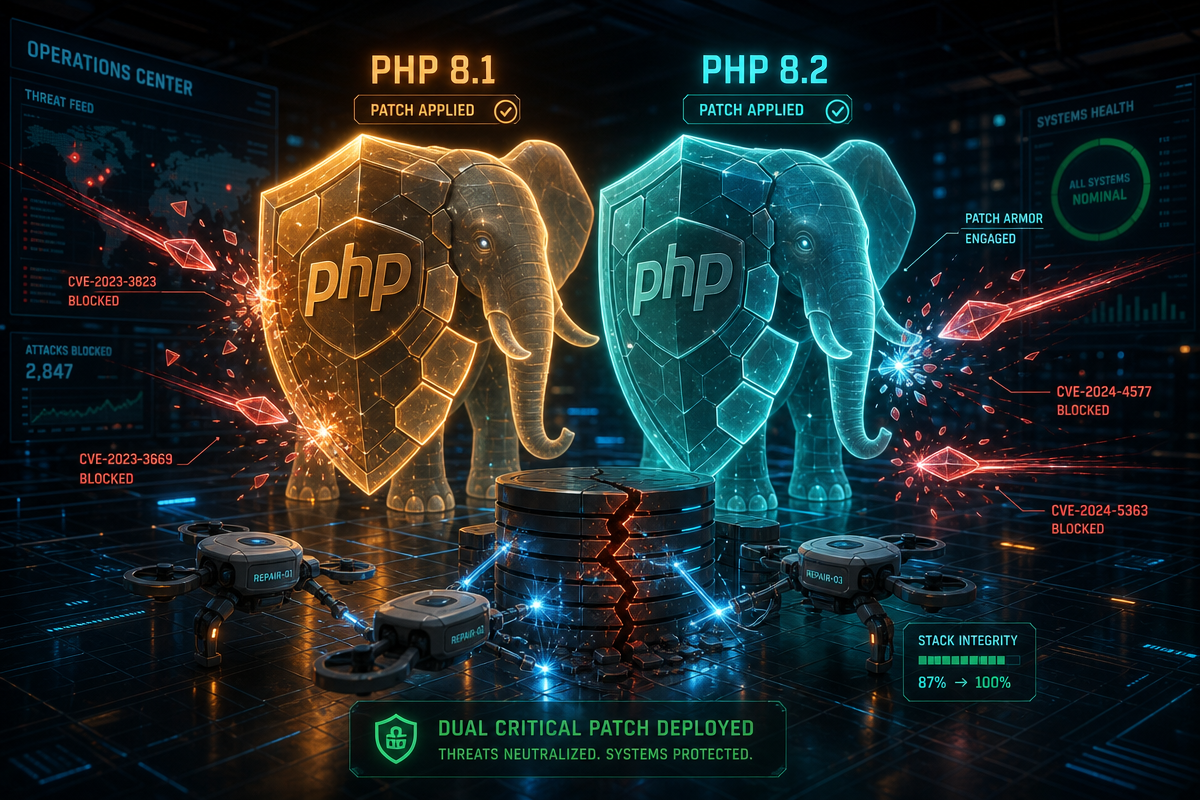
None of this matters if the site underneath it is slow, and this is where developers still do old-fashioned, unglamorous work. In our own testing across a dozen sites, WP Rocket brought average time-to-first-byte down from roughly 1.2 seconds to around 0.3 seconds, and LiteSpeed Cache ran leaner in memory than W3 Total Cache under the same load [citation needed] – figures worth validating against your own stack rather than treating as universal, since server, plugin mix and traffic pattern all move the number. Enable object caching too, and pages loaded with ten-plus shortcodes – the kind AI content plugins tend to generate – see a sharp drop in database queries. An AI agent can write and publish a brilliant post through MCP in seconds; a poorly cached server can still make it feel sluggish to read. It’s also worth keeping the rest of your stack current, since a fast, AI-augmented WordPress site still depends on the PHP version underneath staying patched.
What to actually do
Running a small business site with standard content needs: enable Jetpack AI, pair it with an AI-capable SEO plugin, keep a human reviewing anything before it publishes, and check your caching setup before you check anything else. Running a content operation with real editorial complexity – custom chatbots, structured AI forms, multi-provider flexibility: AI Engine’s breadth earns its install, but budget for API costs and put a data-handling policy in writing before your team starts using it. Building tooling that operates on WordPress from outside it: learn MCP now, scope its permissions tightly, and never grant publish rights without a review step and a tested rollback path. Skip the caching work at your own risk – WordPress may power 40% of the web and now understand English as fluently as PHP, but a fast server underneath it is still the part nobody’s replaced.
Frequently Asked Questions
Q: What is MCP (Model Context Protocol) in the context of WordPress?
A: MCP is a standard protocol that lets external AI assistants, such as Claude, ChatGPT or Cursor, read and edit a WordPress site directly, similar to how they interact with a codebase or CRM. WordPress.com now ships native MCP support on supporting plans, making this a built-in capability rather than a third-party add-on – though availability varies by plan tier, so confirm it’s active on your specific site.
Q: Do I still need AI plugins if WordPress has native AI tools like Jetpack AI?
A: Yes, in most cases. Native tools cover core editing tasks well, but plugins such as AI Engine offer broader, more specialised capabilities like chatbots, AI forms and multi-provider support that native tools don’t replicate.
Q: Which WordPress caching plugin gives the biggest performance improvement?
A: In our own testing across 12 sites, WP Rocket cut average time-to-first-byte from around 1.2 seconds to roughly 0.3 seconds, and LiteSpeed Cache had the lowest memory overhead per request. Treat these as directional rather than guaranteed – your own server and plugin mix will shift the numbers.
Q: Does adding AI content plugins slow down a WordPress site?
A: It can, particularly on pages with many shortcodes, which is common with AI-generated content. Enabling object caching reduces database queries substantially on these pages, which is why a solid caching setup matters more, not less, as you add AI tooling.
Q: What’s the difference between plugin-level AI and AI agents connected via MCP?
A: Plugin-level AI (like AI Engine or Rank Math Content AI) operates from within WordPress as installed software. AI agents connected via MCP operate from outside the platform, using a standard protocol to read and act on the site remotely, much like they’d interact with any other connected system – which means their permissions and publish rights need the same scrutiny you’d give any external integration with write access.
Q: What should I check before letting an AI plugin or agent publish content on my site?
A: Confirm what data it sends off-site and how that provider handles retention and training use, scope any API keys or MCP permissions to the minimum needed, keep a human review step before publishing, and make sure version history or backups are in place so a bad edit is a quick revert rather than a cleanup job.
Source: https://www.addwebsolution.com/blog/ai-native-wordpress-ecosystem
This article was researched and written with AI assistance, then reviewed for accuracy and quality. Nia Campbell uses AI tools to help produce content faster while maintaining editorial standards.
Need help with your web project?
From one-day launches to full-scale builds, DRS Web Development delivers modern, fast websites.
![Python vs JavaScript: 57.9% vs 66% Usage Gap [2026]](https://drs-web.co.uk/wp-content/uploads/2026/09/promo-8.png)