





Last updated: May 11, 2026
You open a browser, type a URL, and within milliseconds a fully rendered page appears – video playing, data loading, animations firing. Behind that instant is a layered system of technologies that most people never think about. But for developers, understanding that stack is the difference between building something that scales and building something that breaks under load. This article breaks down what the web actually is, which technologies power it, and how modern practitioners choose between them.
What the Web Actually Is – and Why It Matters
Image: poptin.com
The web is a distributed system of interconnected documents and applications, delivered over the internet using a set of agreed-upon protocols. The most important of these is HTTP (HyperText Transfer Protocol) – the language a browser speaks when it asks a server for a page, and the language the server uses to respond. The internet is the physical infrastructure (cables, routers, data centres); the web is the application layer that runs on top of it. They are not the same thing, and conflating them is one of the most common sources of confusion for beginners.
At its core, every web interaction follows the same pattern: a client (usually a browser) sends a request, a server processes it, and a response comes back. That response might be a static HTML file, a dynamically generated page, a blob of JSON data, or a video stream. What the browser does with that response – parse it, render it, execute it – depends on the content type. Understanding this request-response cycle is the foundation everything else is built on.
Think of it like a restaurant. The browser is the customer, HTTP is the language used to place an order, the server is the kitchen, and the response is the meal. The database is the pantry. This analogy holds surprisingly well – and when your site goes down, it’s usually because the kitchen is overwhelmed, the pantry is unreachable, or the waiter (your web server) is stuck.
The Technology Stack – Frontend, Backend, and Everything In Between
Web applications are split into two broad halves: the frontend (what the user sees and interacts with) and the backend (the logic, data, and services running on the server). Every modern web app has both, and they communicate via APIs (Application Programming Interfaces) – structured contracts for passing data back and forth.
Frontend technologies are the languages that run inside the browser. HTML provides structure, CSS handles visual presentation, and JavaScript adds interactivity. In practice, almost no one writes raw JavaScript for production apps. Frameworks like React, Vue, and Angular abstract the complexity, letting developers build reusable components rather than wiring up the DOM by hand. The trade-off? These frameworks add build complexity and require tooling like Webpack or Vite to bundle code before it reaches the browser. For teams choosing between server-rendered and client-rendered approaches, the decision often hinges on SEO requirements and performance budgets – worth examining our guide on 21 Best Website optimisation Tools in 2026 to see how these play out in practice.
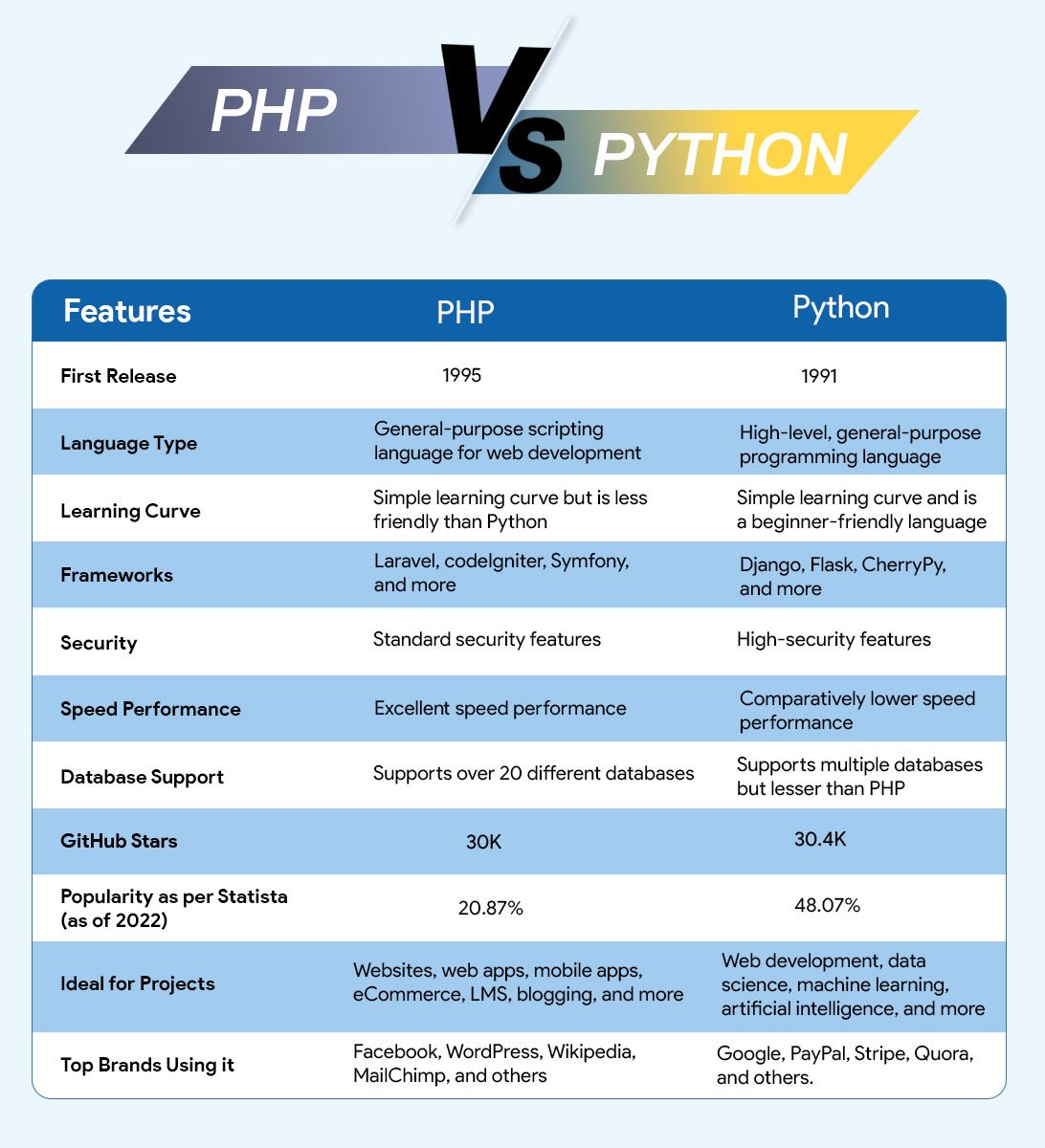
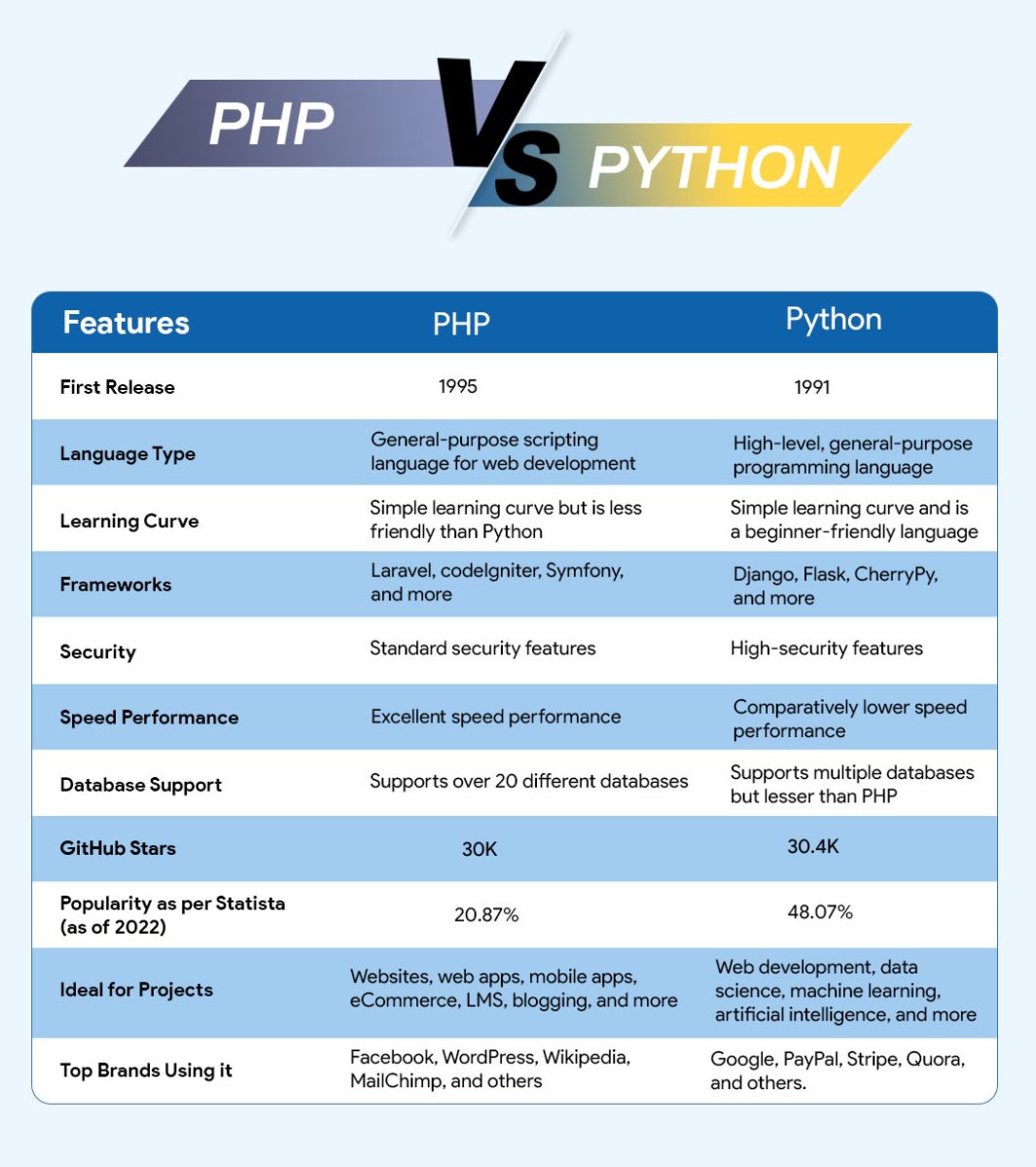
Backend technologies are where the language wars get interesting. PHP remains the dominant server-side language on the open web – it powers WordPress and roughly 75% of all websites. Python has surged in popularity, partly because the same language used for web development (via frameworks like Django and Flask) is also used for data science and machine learning. Node.js brought JavaScript to the server, enabling full-stack JavaScript development. Go, Ruby, Java, and C# round out the mainstream options, each with its own strengths and community conventions. The honest answer is that for most business applications, the choice of backend language matters far less than the quality of the architecture around it. If you are weighing two of the most common entry points, PHP vs Python for web development is a useful starting comparison.
Databases complete the picture. Relational databases like PostgreSQL and MySQL store structured data in tables with defined relationships – ideal for anything with complex querying needs. NoSQL databases like MongoDB store documents in flexible JSON-like formats, which suits rapidly changing data models. Redis handles caching and session storage in memory, making it extremely fast. Most production applications use more than one.
The Nuances Most Introductions Skip
Calling something a “web application” rather than a “website” is not just semantic. Static sites – built from pre-rendered HTML, CSS, and JavaScript – are served directly from a CDN (Content Delivery Network) without server computation at request time. They are fast, cheap to host, and secure because there is no runtime execution to exploit. Dynamic web applications generate responses per-request, enabling personalisation, authentication, and real-time data. The distinction matters because it drives infrastructure decisions worth thousands of pounds annually at scale.
The rise of the Jamstack architecture (JavaScript, APIs, Markup) blurred this line productively. You pre-render what you can, hydrate with JavaScript where needed, and call backend APIs for dynamic data. Next.js and Nuxt.js are the leading frameworks in this space. They give you the speed of static delivery with the flexibility of server rendering – but they introduce their own complexity around build pipelines, incremental static regeneration, and edge functions. If your platform of choice is WordPress and you are wondering whether it still fits this model, the best WordPress alternatives in 2026 landscape is worth reviewing before committing.
One thing many introductions underplay: deployment and infrastructure are as much part of the web technology stack as the language or framework. Containers (Docker), orchestration (Kubernetes), cloud platforms (AWS, GCP, Azure), serverless functions, and edge computing are all part of the modern practitioner’s toolkit. A well-written application deployed badly will underperform a mediocre application deployed on optimised infrastructure.
Choosing the Right Technologies for Your Project
There is no universally correct web technology stack. The right answer depends on team expertise, traffic patterns, data complexity, time-to-market pressure, and long-term maintenance burden. A content-heavy marketing site benefits from a headless CMS with a static frontend. A real-time collaborative tool needs WebSockets and a reactive backend. An e-commerce platform with complex inventory and payment logic benefits from a mature, opinionated framework with strong ecosystem support.
The most important principle: start with what your team knows, then adopt new technologies only when you hit clear limitations. The graveyard of failed projects is full of greenfield rewrites in fashionable frameworks that the team never fully mastered.
The web is not one thing – it is a layered, negotiated set of protocols and conventions that has evolved continuously since 1991. Frontend, backend, database, infrastructure, deployment – each layer has its own ecosystem, trade-offs, and career paths. Practitioners who understand the full picture, not just their corner of it, make better decisions at every level.
If you are building something and need expert guidance on the right stack for your situation, DRS Web Development builds custom websites and web applications for businesses of all sizes – from static marketing sites to complex, data-driven platforms. Get in touch for a free consultation at drs-web.co.uk/contact.
Frequently Asked Questions
Q: What is the difference between the internet and the web?
A: The internet is the global network of physical infrastructure – cables, routers, and servers – that connects devices worldwide. The web is an application layer that runs on top of the internet, using HTTP to deliver websites and web applications to browsers.
Q: What languages do I need to learn to build a web application?
A: At minimum, you need HTML and CSS for structure and styling, JavaScript for interactivity, and at least one backend language (Node.js, Python, PHP, or similar) for server-side logic. Most applications also require knowledge of a database query language like SQL.
Q: What is the difference between a static site and a web application?
A: A static site serves pre-built HTML, CSS, and JavaScript files with no server-side processing at request time. A web application generates responses dynamically per-request, enabling features like user authentication, personalised content, and real-time data updates.
Q: What is a full-stack developer?
A: A full-stack developer is someone who can work across both the frontend (browser-side code) and the backend (server-side logic and databases). In practice, most full-stack developers have stronger skills in one area but are capable across the entire stack.
Q: Which backend language is best for web development?
A: There is no single best choice – PHP, Python, Node.js, and others are all viable depending on your use case and team expertise. PHP dominates existing web infrastructure, Python is strong for data-heavy applications, and Node.js suits real-time applications and teams wanting a single language across frontend and backend.
Source: https://web.whatsapp.com/
This article was researched and written with AI assistance, then reviewed for accuracy and quality. Riya Shah uses AI tools to help produce content faster while maintaining editorial standards.
Need help with your web project?
From one-day launches to full-scale builds, DRS Web Development delivers modern, fast websites.