




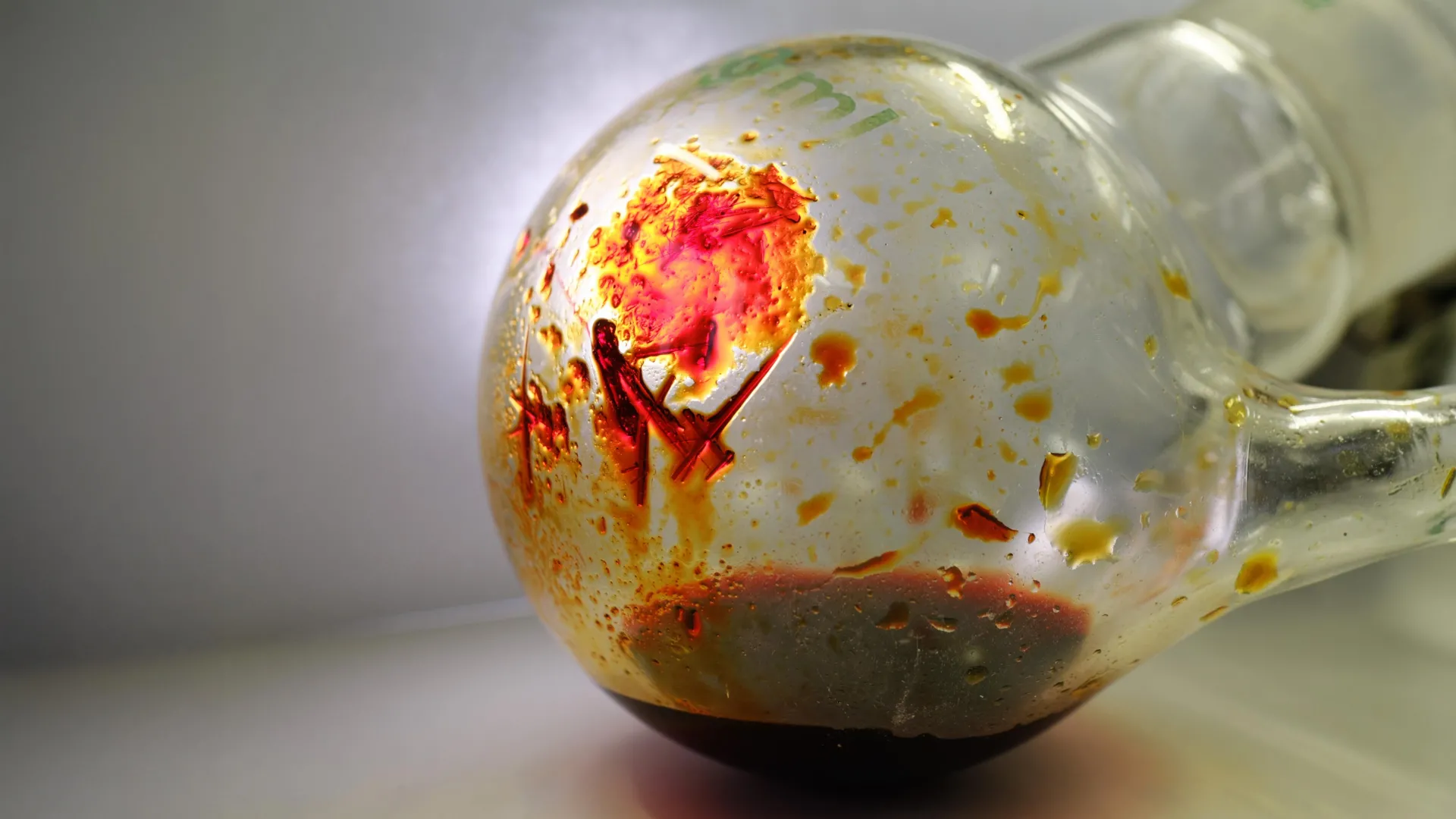

!Stable Silicon Aromatic Ring Achieved
Image: Thorsten Mohr/Saarland University
For almost half a century, chemists kept running into the same wall. They could imagine a particular silicon-based molecule on paper. They could describe it with equations, draw it on whiteboards, and plug it into computer models. But every time they tried to make it in the lab, the fragile structure collapsed.
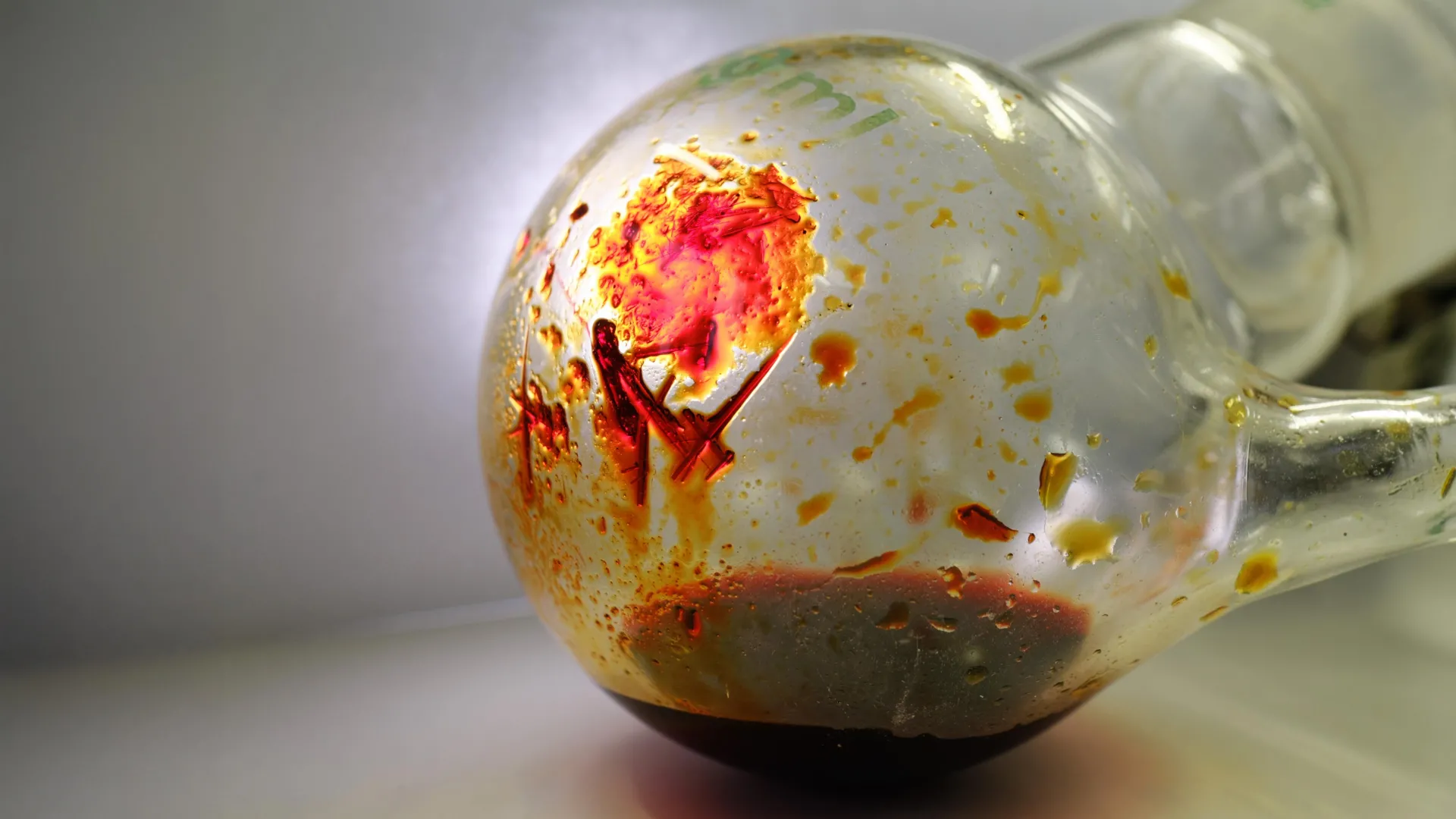
This winter, that story finally changed. A team at Saarland University in Germany, led by inorganic chemist David Scheschkewitz, has created pentasilacyclopentadienide — the first stable five‑atom “silicon aromatic” ring. Almost at the same time, a group in Japan led by Takeaki Iwamoto at Tohoku University independently did the same. After decades of frustration for labs around the world, the two teams now share the spotlight, with their results appearing side by side in Science.
Their success doesn’t just tick off a theoretical “to‑do” list. It opens a new chapter in how we design materials, catalysts, and possibly even future electronics.
A 50-year quest reaches the finish line
The story starts with a deceptively simple idea: if a certain ring-shaped molecule made of carbon works so well, what happens if you swap those carbon atoms for silicon?
Chemists already know and love carbon “aromatics” — flat ring-shaped molecules with electrons that swirl around the ring in a shared cloud. These structures are famously stable, and that stability makes them incredibly useful in everything from dyes and drugs to plastics and fuels. Cyclopentadienide, a five‑membered carbon ring, is one of the classics.
Back in the 1970s, theorists proposed that you could build a silicon analogue: a ring of five silicon atoms with the same kind of shared electron cloud. On paper, it looked possible. In practice, attempts went nowhere. Bonds snapped, atoms rearranged, and would‑be rings broke into less exotic fragments.
The field inched forward only once. In 1981, researchers managed to create a three‑membered silicon ring that behaved like a tiny aromatic system — the silicon cousin of a carbon-based molecule called cyclopropenium. Then progress stalled. For larger silicon rings, everything chemists tried seemed to fail.
That’s what makes the new work so striking. Scheschkewitz, his doctoral student Ankur, and crystallographer Bernd Morgenstern developed a careful synthetic route that finally coaxed five silicon atoms into the right arrangement and kept them there long enough to study. According to the original ScienceDaily report, they verified the structure by X‑ray diffraction and showed that the electrons spread out around the ring in the way you expect for an aromatic molecule.
At Tohoku University, Iwamoto’s team reached the same destination via a different route. Their Science paper by Takeaki Iwamoto and colleagues confirms the key features: a five‑atom silicon ring that carries six shared electrons — the “magic number” for this type of aromatic stability — and holds together under real‑world lab conditions. After so many dead ends, the nearly simultaneous successes feel less like coincidence and more like a sign that the field was finally ready.
Why aromatic rings matter far beyond the lab
To understand why chemists care so much about this particular ring, it helps to zoom out to what aromatic molecules already do for us.
You encounter carbon aromatics every day, whether you know their names or not. They sit at the heart of many pharmaceuticals. They shape the colors in pigments and dyes. And in heavy industry, they quietly power some of the most important processes on Earth.
Take plastics. Modern society runs on polyethylene and polypropylene — the stuff in packaging films, bottles, pipes, cables, and car parts. Factories don’t just “cook up” these plastics in a pot; they grow them using catalysts that stitch small building blocks together into long, controlled chains. Aromatic molecules help make those catalysts tougher and more effective.
“In polyethylene and polypropylene production, for example, aromatic compounds help make the catalysts that control these industrial chemical processes more durable and more effective,” Scheschkewitz explains in the original ScienceDaily report.
Part of the magic comes from the electron cloud that aromatic rings share. Instead of each bond holding its own local electrons tightly, the ring spreads them out evenly. That sharing acts like a shock absorber. It makes the ring hard to break and gives chemists a sturdy “backbone” they can decorate with other atoms and groups to tune a catalyst’s behavior.
Now, imagine giving that same basic framework a twist by swapping carbon for silicon.
Silicon steps into the spotlight
Silicon sits just beneath carbon on the periodic table, but it behaves differently in crucial ways. It’s more metallic. Its bonds are looser. And it doesn’t cling to its electrons as tightly.
That difference is why we use carbon for the flexible, complex molecules of life — proteins, DNA, fats — and silicon for solid networks like glass and computer chips. Under normal conditions, silicon prefers three‑dimensional frameworks over neat little rings.
By forcing silicon into a five‑membered aromatic ring, the Saarland and Tohoku teams have built something that nature simply doesn’t provide. They’ve created a platform where silicon’s quirks can play out in a controlled, tunable way.
“Substituting silicon for carbon in pentasilacyclopentadienide could therefore lead to entirely new types of compounds and catalysts with distinct properties,” the Saarland team notes. In other words, this isn’t just a trophy molecule for the shelf. It’s a foundation.
Independent chemists see it the same way. Many expect that pentasilacyclopentadienide will act as a kind of “Lego hub” — a core you can plug into metals, attach to other silicon units, or embed within larger architectures. Because silicon gives and takes electrons differently from carbon, the resulting complexes could show novel reactivity, helping chemists guide reactions along new paths or make existing processes cleaner and more efficient.
The breakthrough also springs from a thriving research culture. The Prof. David Scheschkewitz’s group at Saarland University has long explored unusual silicon species, pushing the element into bonding patterns once reserved for carbon. Iwamoto’s group at Tohoku has a similar track record in main‑group chemistry. When two such teams independently arrive at the same solution, it signals that a broader shift is underway.
What this could mean for materials and electronics
What might this new silicon ring actually do for the rest of us?
One obvious area is catalysis. Because silicon is more willing to share its electrons, a silicon aromatic ring bound to a metal might pass electrons back and forth in ways that carbon rings cannot. That could translate into catalysts that operate at lower temperatures, use less energy, or avoid rare and expensive metals.
Plastics manufacturing is another candidate. If silicon aromatics can support or replace parts of the catalysts used in polyethylene and polypropylene production, they might make those catalysts more robust under harsh industrial conditions. Longer‑lived catalysts mean fewer shutdowns, less waste, and lower costs.
Materials science and electronics offer more speculative, but intriguing, possibilities. Aromatic systems often play roles in organic electronics and light‑emitting materials because of how their electrons move. A silicon-based aromatic might respond differently to electric fields or light, hinting at future applications in sensors, optoelectronics, or data storage. Researchers will need years to map out those possibilities, but they now have a real molecule — not just a theory — to work with.
Crucially, the two independent syntheses provide a strong foundation. The Science paper by Takeaki Iwamoto and colleagues and the Saarland team’s work cross‑validate each other, giving the community confidence that this isn’t a one‑off fluke. Others can now build on their synthetic strategies, tweak conditions, and explore derivatives.
A celebration of scientific persistence
In the end, pentasilacyclopentadienide is a reminder that some scientific dreams simply take time.
For nearly 50 years, chemists chased a ring that stubbornly refused to exist. They improved their tools, revisited their assumptions, and tried again. The payoff isn’t just a new molecule; it’s a fresh landscape of questions to explore — the kind of territory where future materials, greener processes, and unforeseen technologies often begin.
If you’re curious where this story goes next, keep an eye on how often silicon starts to show up in places once ruled by carbon. Somewhere in that shift, you may spot the quiet influence of a five‑atom ring that refused to stay impossible.
Source: https://www.sciencedaily.com/releases/2026/02/260224023205.htm